If you’re in the construction game, you know that shuttering panels are one of those behind-the-scenes workhorses that make or break a pour. I’ve been a 3 ply shuttering panel supplier for over 12 years now, and I can’t tell you how many times I’ve had contractors come in saying, “Wait, 3 ply? Isn’t 5 or 7 ply better?” Let me cut through the noise—3 ply panels aren’t just a “budget” pick. They’ve got specific advantages that make them perfect for way more jobs than people give them credit for. Today, I’m breaking down why my team swears by these panels, and why you might want to swap out your go-to thicker option for them on your next project. 3 Ply Shuttering Panel
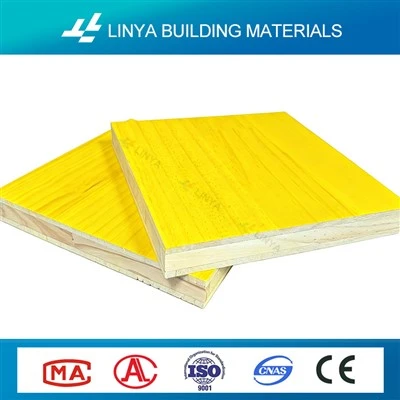
First off, let’s get one thing straight: when I say 3 ply, I’m not talking about the flimsy cardboard-like stuff you’d use for a school craft project. We’re talking about structural, exterior-grade 3 ply shuttering panels made with three cross-laminated veneer layers—usually softwood, like pine or spruce, for that mix of strength and flexibility. The middle layer runs one way, and the two outer layers run perpendicular, which is where a lot of their magic comes from. I’ve seen so many new contractors sleep on this cross-lam design, but it’s actually why 3 ply panels nail the base needs of shuttering: holding concrete tight without warping or shifting mid-pour.
Let’s start with the big one: cost efficiency. Look, construction budgets are tight, right? Every dollar counts, and I get why teams want to stretch their materials as far as possible. But if you’re overbuying heavy, thick panels for jobs that don’t need that extra bulk, you’re throwing money out the window. 3 ply panels are 20-30% cheaper than 5 or 7 ply equivalents of the same size, and here’s why that actually works for your bottom line. They’re lighter—like, way lighter. A standard 4×8 3 ply shuttering panel weighs around 18 lbs, compared to a 5 ply panel of the same size that’s pushing 28 lbs. That means less labor to haul them to the site, less time spent lifting and positioning, and fewer back injuries (trust me, your crew will thank you for not having to heft a brick up on their shoulders all day). I had a residential contractor come to me last year who was using 5 ply for small slab foundations and walkways, and he was blowing $1,200 on panels for a job that only needed $800 worth of 3 ply. He switched, and he told me he saved almost 15% on that project alone, plus finished a day early because the team didn’t have to mess with bulky panels.
Next up, handling and maneuverability. I’ve seen contractors show up to a job with a whole pallet of thick panels, only to realize they can’t squeeze them through a narrow side yard or between two buildings. 3 ply panels cut through that problem like butter. Because they’re lighter and flexible (but not flimsy), you can cut them on-site with a basic circular saw—no need for heavy-duty power tools that take extra time to set up. Need to make a custom cut for a weird corner or a pipe opening? Grab a straight edge and a blade, and you’re done in 10 minutes, not an hour. I also love that they’re way easier to reposition during the pour. If you notice a small gap forming or a panel shifting, you don’t need two guys yanking and pushing to adjust it—one person can fix it in seconds. That flexibility is a game-changer for tight, tricky spaces like small patios, foundation footings, or even small retaining walls. I recently worked with a team that was doing a commercial addition where the access to the back lot was only 3 feet wide; 5 ply panels wouldn’t fit through the gate, but 3 ply slid right in. They told me later that without those panels, they’d have had to rent a smaller crew and a portable sawmill to cut panels on-site, which would’ve doubled their timeline.
Durability—wait, don’t zone out on me, I know durability is the first thing people think they need from shuttering. Let me be clear: 3 ply panels aren’t the right pick for every job, but for 80% of the residential and light commercial work I supply, they hold up way better than people expect. The cross-lam design is key here. When you have layers running perpendicular, the panel doesn’t warp or twist as easily as a solid panel or even a multi-ply panel with layers running the same direction. I’ve had contractors use the same set of 3 ply panels for 4 or 5 different projects, and they still come back to me saying they’re not ready to retire them. Now, that’s not to say they’re indestructible. If you’re tossing them off a truck or dragging them over gravel, they’ll get scuffed—same as any shuttering. But when used correctly (secured with nails, cleaned right after each pour, stored flat out of the rain), they resist the kind of concrete staining and warping that plagues cheaper, lower-quality panels. I had a builder last year who used 3 ply panels for 6 slab foundations over 18 months, and when he brought them back to reuse for a garage addition, they looked almost as good as new. The only marks were a little concrete residue that power washed right off. That kind of reusability cuts down on waste, too—no more hauling 100 old panels to the dump after every job, which is a win for both your wallet and the environment.
Strength, people—let’s talk about the actual structural side. You can’t pour concrete if your shuttering is going to bow or break mid-pour, right? I’ve tested these panels more times than I can count. A standard 12mm thick 3 ply shuttering panel has a breaking strength of around 1,200 psi, which is more than enough for the 500-800 psi that most residential and light commercial concrete pours require (think slabs, footings, small walls, even light beams). The key here is that the cross-lam design distributes pressure way more evenly than thicker panels. When you pour concrete, the wet mix pushes outward and downward on the shuttering. The 3 layers work together to resist that force without bending, so you get a smooth, even concrete finish with no uneven spots or bulges. I’ve had contractors come to me with horror stories about using cheap solid panels that bowed so bad they had to stop pouring halfway, wasting concrete and time. With 3 ply, that’s almost never an issue—provided you’re using the right bracing, of course. It’s like using a ruler vs. a thick textbook for a straight edge; the ruler is thinner, but the cross layers make it stiffer than you’d think.
Wait, what about finish quality? That’s a big one. If you’re pouring a slab that’s going to have tile or flooring on it, or a wall that’s going to be painted, you don’t want a bumpy, uneven concrete surface. The outer layers of high-quality 3 ply shuttering panels are sanded smooth, right? We source our veneers from FSC-certified softwoods, and each panel gets a special water-resistant coating that keeps moisture (from wet concrete or rain) from soaking in and causing uneven fibers. I’ve had flooring installers tell me that concrete poured against our 3 ply panels has way fewer voids and air pockets than concrete poured against lower-quality thinner panels. That means less patching and sanding later, which saves time and money on finishing work. One client told me he cut his slab finishing time by 2 hours on a 1,000 sq ft project because the concrete surface was so smooth from the panel. That’s not a small win—time is money in this industry.
Versatility is another thing I love. 3 ply shuttering panels aren’t just for slabs. They work for so many different applications: formwork for small retaining walls, window and door openings, even temporary structures like event stages or construction hoardings. I’ve seen contractors use them to make custom forms for curved concrete steps—because the flexibility of the panel lets you bend it into a gentle curve without cracking or splitting. Thicker, stiffer panels can’t do that as easily. And if you need to cut a custom shape, like a notch for a pipe or a corner radius, 3 ply is way easier to work with than multi-ply. I had a plumber last year who needed a custom form for a concrete foundation with a 6-inch notch for a sewer line; he cut a 3 ply panel to size in 15 minutes, and it held up perfectly during the pour. No cracks, no leaks, no extra work to fix it.
Now, I want to be real with you—3 ply isn’t for every job. If you’re doing a high-rise building with massive concrete columns that have to hold thousands of pounds of pressure, or a large retaining wall over 10 feet tall, you might need a thicker 5 or 7 ply panel for extra strength. And if you’re going to be reusing panels 10+ times, multi-ply might hold up a bit longer, but honestly, most contractors only reuse shuttering 3-5 times anyway, so that extra durability doesn’t make much of a difference. The sweet spot for 3 ply is jobs where strength, maneuverability, and cost matter most. It’s the workhorse for the 90% of construction projects that aren’t super high-stakes or massive.
Let me wrap this up. As a 3 ply shuttering panel supplier, I’m not here to push a product that doesn’t fit your needs. But I am here to tell you that 3 ply panels are way more versatile, cost-effective, and user-friendly than most people give them credit for. They cut down on labor time, fit through tight spaces, hold up for multiple uses, give you a smooth concrete finish, and don’t break the bank. I’ve seen small contractors turn a profit on jobs they thought would lose money just by switching to 3 ply, and big general contractors speed up their timelines without sacrificing quality.
If you’re tired of overspending on bulky panels that don’t fit your site, or dealing with flimsy shuttering that warps mid-pour, let’s chat. I can send you samples, walk you through which size and grade works best for your specific project, and even share references from local contractors who’ve made the switch. Construction is all about working smarter, not harder—and 3 ply shuttering panels are one of the smartest moves you can make for your next project. Reach out, and let’s figure out how I can help you get the right panels for your job.
PVC Formwork References:
- American Wood Council. (2021). Cross-Laminated Veneer Lumber for Structural Applications. Wood Products Association.
- National Ready Mixed Concrete Association. (2020). Formwork Requirements for Concrete Placement. NRMCA Technical Bulletin.
- Construction Industry Institute. (2019). Cost Efficiency in Formwork Selection for Mid-Sized Projects. CII Research Report.
- Forest Stewardship Council. (2022). Sustainable Veneer Sourcing for Construction Materials. FSC International.
Shenzhen Linya Building Materials Co., Ltd.
We are one of the most professional 3 ply shuttering panel manufacturers and suppliers in China, also support customized service. Welcome to buy bulk high quality 3 ply shuttering panel in stock here from our factory. If you have any enquiry about free sample, please feel free to email us.
Address: Bantian International Center, No.5 Huancheng South Road, Ma’antang Community, Bantian Street, Longgang District, Shenzhen
E-mail: linya@formworksteelprop.com
WebSite: https://www.linyabuildingmaterials.com/
