If you’ve ever changed a flat tire, tightened a door panel that’s been rattling on a long road trip, or crawled under your car to replace a rusted exhaust bolt, you’ve interacted with automotive fasteners—tiny pieces of metal that keep every part of a vehicle connected, safe, and functioning. For a long time, I thought fasteners were just “nuts and bolts” until I started running our automotive fastener supply business 12 years ago. Back then, a local mechanic told me, “If a bolt fails at 60 mph, it doesn’t matter if it’s cheap—you’re dealing with a crash.” That line stuck with me, because it’s the core of why we don’t just sell fasteners; we sell parts that meet strict, non-negotiable quality standards. Automotive Fasteners
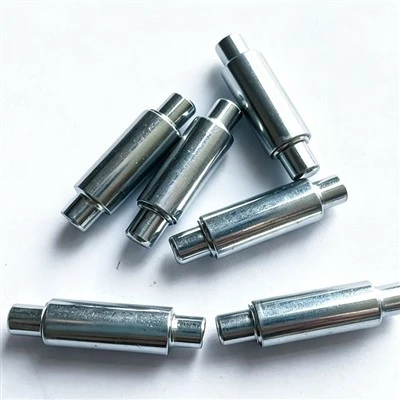
Most people outside the automotive parts industry don’t realize that automotive fasteners have a different set of rules than the bolts holding a bookshelf together. Automotive fasteners aren’t one-size-fits-all. A bolt for a car’s engine cylinder head is exposed to extreme heat and constant vibration, so it can’t be the same as a bolt used to hold the interior glove box in place. Every fastener—from a small clip for a dashboard wire harness to a massive wheel hub bolt—has to pass rigorous tests to make sure it will perform as intended for the life of a vehicle, or even longer. Over the years, I’ve learned that cutting corners on these standards leads to more than just a faulty part; it leads to recalls, unsafe vehicles, and lost trust. That’s why we’ve built our entire business around sourcing and supplying fasteners that hit every required mark, no exceptions.
Let’s start with material standards, because a fastener is only as good as the metal it’s made from. The automotive industry relies heavily on carbon steel, alloy steel, and stainless steel, but not all grades are created equal. For example, grade 8.8 alloy steel bolts—one of the most common types for critical parts like suspension components—must have a minimum tensile strength of 800 megapascals (MPa) and a yield strength of 640 MPa. Tensile strength is the amount of stress a material can take before breaking, and yield strength is how much stress it can handle before permanently deforming. If a bolt doesn’t hit those numbers, it could stretch or snap under pressure, especially when carrying heavy loads or enduring rough road conditions.
Stainless steel is used for parts that need corrosion resistance, like exhaust system bolts or underbody clips. For these, we almost always stick to grade 304 or 316 stainless steel. Grade 304 is enough for most underbody parts, but grade 316 is better for areas that see salt, rain, or road de-icing chemicals—like wheel lug nuts in regions with harsh winters. I remember a few years ago, a customer brought us a batch of cheap stainless steel bolts they’d bought from a non-specialty supplier; after one winter, they’d rusted completely, and the customer had to replace all their wheel lugs before a big delivery run. That’s when I made a rule for our business: we never source fasteners with material grades that don’t match the application. If a customer needs parts for a coastal area with high humidity, we recommend grade 316, not just the cheapest stainless steel option.
Next up is dimensional accuracy, which might sound boring, but it’s make-or-break for a fastener. Imagine a bolt that’s supposed to fit a specific threaded hole in an engine—if its threads are even 0.01 millimeters off, it can strip the hole, cause a leak, or come loose over time. Automotive fasteners have tight tolerances set by organizations like the International Organization for Standardization (ISO) and the Society of Automotive Engineers (SAE), two groups that I’ve worked closely with to keep our supply chain aligned. For example, ISO standard 898 defines the dimensional and mechanical properties of steel fasteners used in automotive applications, including thread pitch, length, and head diameter. We use precision measuring tools—go/no-go gauges, optical comparators, and digital calipers—to check every batch before it leaves our warehouse. A few years back, a supplier sent us a batch of M12 bolts with threads that were slightly too narrow; our quality team caught it during a routine check, and we sent it back before it ever reached a customer. That’s the kind of step that keeps our customers coming back.
Surface finish is another standard that’s often overlooked, but it’s critical for two reasons: corrosion resistance and load distribution. A bolt with a smooth, uniform finish will grip a nut or threaded hole better than one with rough, uneven edges, reducing the chance of loosening from vibration. It also provides a barrier against moisture and chemicals that cause rust. Common surface finishes for automotive fasteners include zinc plating, hot-dip galvanizing, and达克罗 (Dacromet) coating. Zinc plating is the most common for interior and moderately exposed parts; it’s affordable and provides good corrosion resistance for dry environments. Hot-dip galvanizing is used for larger underbody parts that need extra protection, like frame bolts. Dacromet, a zinc-flake coating, is ideal for high-heat areas like exhaust components because it can withstand temperatures up to 500°C without flaking off. I’ve seen first-hand what happens when a finish is poor: a customer once installed exhaust bolts with a cheap, thin zinc coating, and within a year, the coating wore away, leading to rusted bolts that seized up during a repair job. Now, we test every surface finish in our quality lab to make sure it meets the required thickness—usually between 5 and 25 microns, depending on the application.
Mechanical testing is where we really verify that fasteners can handle real-world conditions. These tests go beyond just checking strength on paper; they simulate what a fastener will face during its life. One of the most important tests is the salt spray test, which measures corrosion resistance. A fastener is placed in a chamber with a saltwater mist for a set number of hours—usually 48 to 1,000 hours, depending on the standard—and then checked for rust. Another key test is torque-tension testing, which makes sure a bolt can be tightened to the correct torque without breaking or stripping. Vibration testing is also crucial, because vehicles are constantly bouncing, shaking, and vibrating while driving. We mount fasteners to a test rig that mimics road vibration, and measure how well they hold their torque over thousands of cycles. I still remember a batch of suspension bolts we tested a few years ago—they passed the tensile strength test, but during vibration testing, they loosened too much. We traced the problem to a minor flaw in the thread design, worked with the supplier to fix it, and the revised batch passed with flying colors. That’s why we don’t just rely on supplier certificates; we run our own in-house tests for every batch we carry.
Traceability is a quality standard that’s become even more important in recent years, especially as automotive manufacturing has become global. Every automotive fastener should have a traceable batch number that links back to the material source, production date, and test results. This is critical if a part is ever part of a recall—manufacturers need to know exactly which parts went into which vehicles, and suppliers need to be able to track the issue back to its source. For our business, we keep detailed records of every fastener we stock, from the steel mill that made the raw material to the delivery date to our customer. That means if a customer has a question about a specific batch, we can pull up all the data in minutes, no fuss.
I also want to mention that quality standards are only as good as the people who enforce them. Our quality control team has over 20 years of combined experience in automotive fasteners, and we send them to annual training sessions to stay up to date on new ISO and SAE standards. We’ve also built long-term relationships with suppliers who share our commitment to quality—we don’t work with dozens of random suppliers; we partner with a small group of trusted manufacturers who pass all our audits. That consistency is why we’ve been able to supply major automotive repair shops and even small manufacturers across the country for over a decade.
If you’re an automotive mechanic, a parts manager, or a small vehicle manufacturer, you know that using the right fastener makes a huge difference in safety and reliability. Cutting corners on a cheap, low-quality fastener might save you a few dollars upfront, but it could lead to costly repairs, warranty issues, or even safety hazards down the line. At the end of the day, automotive fasteners are the unsung heroes of every vehicle—they hold everything together, and their quality can mean the difference between a smooth drive and a breakdown.

If you’re looking for automotive fasteners that meet all the required quality standards, from material grade to dimensional accuracy to corrosion resistance, we’re here to help. We carry a wide range of fasteners for every application, and our team can help you find exactly what you need, whether it’s for a routine repair, a custom vehicle build, or a large manufacturing run. Don’t risk your project’s safety or reliability on subpar parts—reach out to our team today to discuss your fastener needs and learn how we can support your work.
Rivet References
- ISO 898-1: 2013, Mechanical properties of fasteners made of carbon steel and alloy steel — Part 1: Bolts, screws and studs with specified property classes — Coarse thread and fine pitch thread. International Organization for Standardization.
- SAE J429: 2021, Mechanical Fasteners, Metric and Inch Series. Society of Automotive Engineers.
- ISO 9227: 2017, Corrosion tests in artificial atmospheres — Salt spray tests. International Organization for Standardization.
- SAE J1576: 2019, Vibration Testing for Fasteners. Society of Automotive Engineers.
Wuyuan Jieyi Automotive Electrical Appliance Co., Ltd.
As one of the most professional automotive fasteners manufacturers and suppliers in China, we’re featured by quality products and good service. Please rest assured to wholesale bulk durable automotive fasteners in stock here from our factory. We also accept customized orders.
Address: No. 7 Likeng Road, Industrial Park Wuyuan County, Shangrao City, Jiangxi Province
E-mail: wyjydqz@163.com
WebSite: https://www.wyjydq.com/
