Hey everyone, it’s Jake here from the induction melting furnace team – if you’ve ever worked with metal foundries, jewelry makers, or even small-scale scrap recyclers, you know that an induction furnace is way more than just a big box that gets hot. I get so many questions from new clients and even some old heads in the game asking, “Wait, what’s the deal with that control panel? It looks all fancy with buttons and screens, but does it actually do more than just turn the damn thing on?” Today I’m breaking that down, no super jargon-heavy textbook stuff, just real talk from the supplier side. Let’s dive in. Induction Melting Furnace
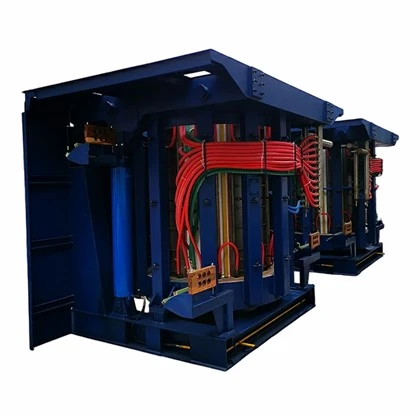
First off, let’s keep this relatable. If you’ve ever baked, you know you don’t just dump batter in an oven and cross your fingers you get a cake that’s not burnt or raw. You set the temperature, maybe adjust the time, watch the oven’s display to make sure it doesn’t drop too low mid-bake. An induction melting furnace is basically that oven, but way more high-stakes – we’re talking melting brass, aluminum, stainless steel, even precious metals like gold or silver. The control panel here isn’t just a fancy add-on; it’s the brain, the co-pilot, and sometimes the safety guard all rolled into one. And before you say “induction is just magnetism, how hard can it be?” let me tell you – way harder than it sounds. That control panel is the reason you don’t end up with a messy, uneven melt or worse, a broken furnace or a safety hazard.
Let’s start with the basics that every operator actually cares about, not the technical spec sheets. First up, power and frequency tuning. Induction melting works by creating an electromagnetic field that heats metal, right? But different metals need different frequencies. Like, if you’re melting thin aluminum scrap, you need a higher frequency to get the field to penetrate the small pieces evenly. If you’re melting a huge block of steel, you need a lower frequency so the field can reach the core without wasting power. The control panel is where you set that. You can’t just guess – if you get the frequency wrong, you’re either wasting electricity (which no shop owner wants, let’s be real) or getting a melt that’s half-solid, half-melted garbage. I’ve had a client last year who tried skipping the control panel settings and just cranked the power on a stainless steel batch, and he ended up with a furnace liner cracked from uneven heating. Oops. Lesson learned. The control panel lets you fine-tune that in real time, so you’re not wasting product or cash.
Then there’s temperature monitoring and control – this is a big one for anyone working with specific metal grades. If you’re melting gold for jewelry, you can’t have it too hot (you’ll lose metal to oxidation, which is money down the drain) or too cold (it’ll be lumpy when you pour it). If you’re melting aluminum for auto parts, you need it at a precise temp to get the right casting strength. The control panel has built-in sensors – sometimes pyrometers, sometimes thermocouples, depending on the furnace model – that feed real-time temp data straight to the screen. You set a target temp, and the panel adjusts the power automatically to hit it. No more standing around with a thermometer, guessing when it’s ready to pour. I’ve got a client who runs a small jewelry shop and swears by his panel – he used to have to wait 20 minutes just to check the temp, and now he can monitor it from his phone (yeah, some of our newer panels have app integration) while he’s prepping his molds. Game changer for small ops that don’t have a full-time furnace operator.
Wait, let’s not skip the safety part – this is huge, especially for foundries that run 12-hour shifts. Induction furnaces get hot, obviously, but there’s more at stake: overheating the power supply, short circuits, even furnace liners failing. The control panel is loaded with safety protocols that kick in before anything bad happens. Like, if the temp spikes way beyond your set point, the panel will automatically cut power to prevent melting the furnace itself. If the cooling system (super important for induction units – they need water or air to stay cool) starts running low, the panel beeps and shuts the furnace down slow so no parts get damaged. I’ve had a few people ask me, “Can’t you just turn the power off manually if something’s wrong?” and yeah, but if you’re in the middle of a big melt, fumbling for a switch when the liner’s already starting to crack is a recipe for a mess. The control panel’s automatic safety features are there to catch small issues before they turn into big, expensive headaches. Last year, a mid-sized foundry we work with had a cooling line kink mid-shift – their panel caught it in 2 seconds, shut down the furnace, and they just had to fix the line instead of replacing a $2k liner. That’s the control panel earning its keep, no question.
Another thing that operators don’t always talk about, but is a huge time-saver: recipe storage. If you’re melting multiple metals all the time, why re-set every parameter every time? Say you run a shop that does brass one day, aluminum the next, and gold for custom orders on the side. You can program a “recipe” into the control panel for each: set frequency, temp, power ramp rate, even cooling settings. Then you just pull up the recipe with the press of a button, no guessing, no tweaking each time. I have a client who’s a custom metal casting studio – he does 15 different metals a month, and before our newer panels, he’d take 20 minutes to set up each melt, and sometimes mess up the recipe and waste material. Now he hits a pre-saved button, and the furnace is ready in 2 minutes. That’s hours of saved time a week, which translates to more work, more cash. No brainer.
Now, let’s be real – I’m a supplier, so I see both the good and bad sides of control panels. Not all panels are created equal. I’ve worked with clients who bought cheap furnaces from no-name brands, and their control panels are garbage: they lag, the temp readings are off by 100 degrees, the safety features are nonexistent. Those clients end up calling us within a year saying their furnace is broken, and half the time it’s because the control panel failed mid-melt. That’s why when we design our furnaces, we spend as much time on the control panel as we do on the induction coil or the furnace liner. We use reliable, industrial-grade panels that are easy to use for new operators, but have enough advanced features for seasoned foundry guys. No confusing menus, no random error codes that you have to Google for hours – our panels display errors in plain English, like “Cooling pressure low” instead of some code that only an engineer understands.
Wait, also, let’s talk about remote monitoring, because that’s a game-changer for a lot of businesses. A few years back, we started integrating our panels with basic cloud connectivity, so you can check your furnace’s status from anywhere: are you on a job site and need to make sure the melt is on track? Forgot to turn the furnace off after a weekend run? You can do it from your laptop or phone. I had a client who owns a small scrap yard that only has one guy working there after hours – he had a panic attack once when he remembered he started a 500lb steel melt before leaving for the day. He pulled up the panel on his phone, saw it was on track, and even adjusted the power a little so it wouldn’t overheat while he was gone. No need to drive 45 minutes back just to check. That’s the kind of feature that makes a control panel worth every extra buck.
Let me wrap this up with a real example, because I hate just talking tech without context. Last year, we delivered a 500kg induction furnace to a small aluminum casting shop in Ohio. The owner, Mike, had been using a 20-year-old furnace with a beat-up control panel that had faded buttons and temp readings that were 80 degrees off. He was wasting so much aluminum from uneven melts, and losing money on power because he couldn’t tune the frequency right. We installed our standard model, which has our new control panel: color touchscreen, recipe storage, safety protocols, remote access. Three months later, he called me super excited – he said he’s cut his material waste by 12% and his electricity bill by 18% in that time. “That little screen on the front of the furnace paid for itself in 6 weeks,” he told me. That’s exactly what we’re talking about here.
At the end of the day, the control panel isn’t just a bunch of buttons and a screen – it’s the thing that takes your furnace from a random hot box to a reliable, efficient tool that saves you time, money, and stress. It’s the co-pilot that keeps your melt on track, the safety guard that keeps you from making costly mistakes, and the organizer that keeps you from re-inventing the wheel every time you fire up the furnace.
If you’re in the market for an induction melting furnace, or if your current one’s control panel is giving you headaches, hit us up to chat. We don’t do pushy sales stuff – we’ll ask you what you’re melting, how much, how often, and help you figure out exactly what kind of control panel (and furnace) fits your needs. No generic specs, no confusing jargon, just real advice from the supplier who’s been working with these units for years.

Before I go, let’s keep this real – I’ve seen too many people sleep on the control panel, but it’s the single most important part of the whole system. You can have the best induction coil and the toughest liner, but if your control panel is garbage, you’re throwing money away. That’s why we build ours with operators in mind, not just engineers. If you want to talk through your specific setup, just reach out – we’re here to help.
Rolling Mill References
- ASM International. (2019). Induction Melting Technology for Metals and Alloys. Materials Park, OH: ASM International.
- Foundry Management & Technology. (2022). "The Evolving Role of Control Systems in Modern Induction Furnaces". Vol. 150, No. 4, pp. 32-37.
- Indian Institute of Metals. (2021). Practical Guide to Induction Melting for Small and Medium Foundries. Kolkata, India: Indian Institute of Metals.
Xi’an Aobang Technology Co., Ltd.
As one of the most professional induction melting furnace manufacturers and suppliers in China, we’re featured by quality products and good price. Welcome to buy durable induction melting furnace for sale here and get quotation from our factory. Customized orders are welcome.
Address: No.268, Caotan 6th Road, Economical and Technological Development Zone, Xi’an, Shaanxi, China.
E-mail: alicezhang@xaabfurnace.com
WebSite: https://www.xaabfurnace.com/
