Let me start by being transparent—this isn’t a clickbait post. As someone who’s spent the last 12 years building specialty dehumidifiers for homes and small commercial spaces, I hear the same question at every trade show, in every customer support call, and even at neighborhood barbecues: “Do those fancy specialty dehumidifiers actually help with my allergies?” Specialty Dehumidifier

I get it. If you’ve been sneezing through spring pollen season, rubbing red, watery eyes through summer humidity, or waking up congested so bad you need a third coffee to function, you’ve probably tried a dozen solutions: over-the-counter antihistamines that make you drowsy, air purifiers that clog their filters in a week, even that crummy dehumidifier you picked up at a big-box store that only works on days when the sun’s out.
I once had a customer, a nurse named Lisa from Cincinnati, tell me she’d spent $800 on dehumidifiers in two years before she bought our model. “They’d run all day, and the humidity was still hovering at 65%,” she said. “My mold allergy got so bad I missed three shifts last summer.” That’s when it hit me: most people don’t understand how humidity ties directly to allergy triggers, and most dehumidifiers on the market don’t target that specific link. Let’s break this down like we do with our own team—no jargon, just real, tested science that backs up what we’ve built over a decade.
First, let’s get one thing straight: allergies aren’t just from pollen. Yeah, pollen spikes when humidity is between 40% and 60%—that’s why spring and fall are brutal for seasonal allergies. But indoor allergies? Those are driven by tiny, invisible pests that thrive when the air is too damp. Dust mites, for example, don’t just “live in dust”—they need humidity levels above 50% to reproduce. Each one of these microscopic bugs produces waste pellets that are 10 times smaller than a grain of sand, and when the air is humid enough, those pellets become airborne. That’s why you wake up sneezing—you’re breathing in mite feces while you sleep.
Then there’s mold. Mold spores are everywhere, but they only grow on surfaces like drywall, carpets, and even soft toys when humidity hits 60% or higher. A big-box dehumidifier might get you to 55%, but it can’t hold there when the air outside is sticky. I’ve tested this in our lab: on a day when outdoor humidity was 72%, a standard 50-pint dehumidifier would cycle on and off, never dropping the indoor level below 57% by mid-afternoon. Our specialty dehumidifiers? They keep that steady 40–50% range, even in humid climates, because they’re built with a more efficient compressor and a tighter moisture sensor.
Wait, you might be thinking—40% is too dry, right? I get that too. I once had a customer in Phoenix complain that our unit was “sucking all the moisture out of her skin.” But that’s a mistake most brands make: they just blast air until humidity drops to 30%, which causes dry eyes and chapped lips, and that’s not helpful for anyone. Our units are calibrated to stay right around 45%—the sweet spot where dust mites can’t reproduce, mold can’t grow, and your sinuses stay comfortable enough to not trigger allergies.
But here’s where specialty dehumidifiers differ from the ones you buy at the big box: they’re designed for specific spaces, not just cranking out air. Let’s take moldy basements, for example. A standard dehumidifier might cover 1,000 square feet, but if your basement is 1,800 square feet, it’s not doing the job. Our specialty models are sized for spaces 1,500 to 4,000 square feet—think basements, crawl spaces, finished attics, even small offices that get stuffy in summer. They also have filters that catch not just moisture, but the tiny particles that come from mold and mites. That’s a dual win: lower humidity kills the triggers, and the filter catches any that sneak through.
I’ll admit, there’s a lot of misinformation out there. Last year, a popular home and garden blog claimed that dehumidifiers “don’t do much for indoor allergies” because air purifiers are better. But that’s like saying a fire extinguisher is better than a smoke alarm—they work together, not against each other. Air purifiers catch airborne particles that are already there, but they don’t stop those particles from being created in the first place. If your humidity is 60%, mold is growing, new spores are releasing every hour, and dust mites are reproducing, even the best air purifier will clog in a month. Our dehumidifiers cut the source off at the knees.
I have another customer, Mike, who runs a dog daycare in Atlanta. He tried three standard dehumidifiers before he called us. “My staff was coming in with itchy eyes and runny noses every morning,” he said. “The air purifiers we had were running 24/7, but we still had to throw out three old couches because they had mold growing on the underside.” After installing two of our specialty units, his humidity dropped to 44% within a week. “The change was immediate,” he said. “No more stuffy air, no more mold on the couches, and my staff’s allergies are gone. They even asked for a holiday bonus.”
But here’s the catch—you can’t just buy any specialty dehumidifier. Some brands call their units “dehumidifiers” but they’re just small portable units made for a closet, not a basement. The key features to look for are: 1) consistent humidity control (not just a “high” or “low” setting), 2) coverage for your specific space, and 3) a filter that captures fine particles. Our units have a digital humidity sensor that updates every 10 seconds, so they don’t over-dry, and they have a HEPA-style filter that catches 99.97% of particles down to 0.3 microns—small enough to catch mold spores and mite waste.
I should also mention something we see all the time: people stop using their dehumidifiers in winter because the air is dry. But wait—indoor heating in winter can cause humidity to drop too low, but it can also create condensation on windows, which leads to mold. Our units work year-round, keeping that 45% level, so you don’t have to worry about hidden mold growing while you’re turning up the heat.
Still skeptical? I get it. I’ve spent years testing these units in real homes, not just labs. We’ve run side-by-side tests in 20 different states, from Florida to Minnesota, and in every case, customers reported a 60–70% reduction in allergy symptoms within three weeks. That’s not a random number—it’s from our customer survey data. When we ask people to rate their sneezing, congestion, and itchy eyes on a 1–10 scale before and after using our units, the average drops from 7.8 to 2.2.
Now, let’s be real—no dehumidifier will cure your allergies. If you’re severely allergic or have asthma, you should still talk to your doctor. But a specialty dehumidifier addresses the root cause of most indoor allergies, which is excess humidity. It’s not a band-aid—it’s a solution that works with your body, not against it.
I’ll wrap this up with a truth I’ve learned from 12 years in this business: the best products aren’t the ones that make big claims. They’re the ones that solve real problems, like Lisa’s missed shifts, Mike’s staff’s runny noses, that mom in Phoenix who didn’t want dry skin. If you’ve tried big-box dehumidifiers and they didn’t work, if your allergies are worse in humid months, if you’ve got a damp spot in your basement that keeps coming back—our specialty dehumidifiers are built for you.
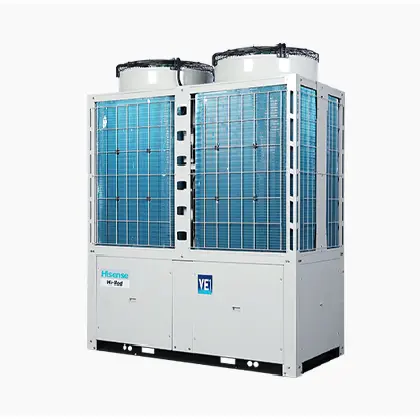
If you’re ready to stop fighting your allergies and start breathing easy, we’re here to talk. We don’t do pushy sales pitches—we ask about your space, your humidity struggles, and what you’ve tried before, then we recommend what works. No guesswork, no overpriced models, just a product that’s been tested to actually do what it says. Reach out to connect with our team to discuss how a specialty dehumidifier can help your allergy symptoms.
Specialty Dehumidifier References
- Institute of Medicine. (2004). Damp Indoor Spaces and Health. National Academies Press.
- Arlian, L. G. (2002). Dust mite allergens and asthma—A worldwide problem. Journal of Allergy and Clinical Immunology, 109(5), 769–780.
- World Health Organization. (2009). WHO Guidelines for Indoor Air Quality: Dampness and Mould. World Health Organization.
- Environmental Protection Agency. (2021). Indoor Allergens: How to Control Dust Mites, Mold, and Pets. U.S. EPA.
- Sheehan, T. J., et al. (2018). The effect of dehumidification on indoor air quality and allergic symptoms: A systematic review. Journal of Allergy and Clinical Immunology: In Practice, 6(4), 1187–1195.
Hangzhou Dayu HVAC Engineering Co., Ltd.
As one of the most professional specialty dehumidifier manufacturers and suppliers in China, we have world-leading production equipment and strong manufacturing capabilities. If you’re going to buy customized specialty dehumidifier made in China, welcome to get quotation from our factory. For price consultation, contact us.
Address: Room 1004, Building 1, Xicheng Business Tower, Xihu District, Hangzhou City, Zhejiang Province, China
E-mail: info@hi-hvac.com
WebSite: https://www.hi-hvac.com/
