If you’ve ever walked through a warehouse aisles packed with unused space between rows of static shelving, you’ve probably wondered how a facility could hold more product without building a larger space. That’s exactly where mobile racking comes in—and as a mobile racking supplier, I’ve seen firsthand how this adjustable storage solution isn’t one-size-fits-all. I work with customers across industries every month, and the question I hear most is: “Is mobile racking right for my space?” The short answer is: it’s ideal for specific sectors that deal with high-volume, slow-moving or temperature-sensitive inventory, tight storage footprints, and the need for organized, secure access. Today, I’m breaking down exactly which industries thrive with mobile racking, why, and what to keep in mind if you’re considering making the switch. Mobile Racking

First, let’s get clear on what mobile racking actually is, in case you’re new to it. Unlike static racking, which requires fixed aisles between every row to let forklifts, pallet jacks, or personnel move, mobile racking sits on a motorized base that glides along a floor-mounted track. At the push of a button (or sometimes a manual crank for smaller units), entire rows shift back and forth, opening up only one narrow aisle when you need access. That cuts down on wasted aisle space by up to 80%—a game-changer for facilities where every square foot of storage counts. But even with that benefit, it’s not for every business. Let’s start with the industry that’s been our most consistent customer for the last decade: cold storage and temperature-controlled facilities.
Cold storage warehouses operate on two core constraints: space is at a premium, and energy costs are astronomical. Keeping a freezer at -20°F or a refrigerated space at 35°F is expensive, and every foot of wasted space is a wasted dollar on refrigeration. A customer I worked with last year was a regional frozen food distributor in the Midwest. They had a 10,000 square foot freezer that was already overcrowded, and they were leasing an extra 3,000 square feet of adjacent space just to store overstocked pallets of frozen vegetables and ready meals. After we installed mobile racking in their main freezer, they eliminated the lease on the extra space entirely. Because mobile racking only opens one aisle at a time, the cold air doesn’t spill out into unused aisles every time a forklift moves through—another huge energy saver. The National Cold Storage Association notes that temperature-controlled facilities waste 15-20% more energy than necessary due to constant door and aisle exposure; mobile racking cuts that waste significantly. The only caveat here is that mobile racking requires smooth, level floors—something we always assess before installation, especially in existing cold storage spaces that might have shifted slightly over years of freeze-thaw cycles. For any business storing perishables at sub-zero or regulated temperatures, mobile racking isn’t just a storage upgrade—it’s a cost-cutting measure that pays for itself in 18 to 24 months, based on our customer data.
Next up: manufacturing and parts distribution. For mid-sized to large manufacturing plants, inventory includes raw materials, work-in-progress parts, and finished goods, often with SKUs that don’t move quickly. A metal parts manufacturer in the Southeast reached out to me two years ago because their static racking system left them with half their production floor unused for storage. They had over 200 different types of steel tubing, brackets, and fasteners, and their static aisles meant they couldn’t rearrange easily when new materials arrived. Mobile racking let them group similar parts together without needing separate aisles for each section. Now, they can shift a single row to access a rarely used size of stainless steel, or open a wider aisle for a full pallet of finished engine parts during a production rush. One of the biggest benefits here is that mobile racking supports high weight capacities—we install systems that hold up to 20,000 pounds per pallet row, which is critical for manufacturing parts that are bulky or heavy. The Material Handling Industry Association has tracked a 25% average increase in storage density for manufacturing facilities that switch to mobile racking, and that directly translates to less time spent moving materials around the plant, lower labor costs, and fewer delays when production ramps up. It’s also perfect for industries with seasonal production peaks; auto parts manufacturers, for example, might need extra storage for new model year parts in early spring, and mobile racking lets them adjust their storage layout in hours, not days, without adding new shelving.
Another industry that’s a perfect match: library and archival storage. This is one that surprises a lot of people, but it’s where mobile racking’s ability to maximize vertical and horizontal space shines brightest. University libraries, historical societies, and national archives hold millions of books, manuscripts, and media that are rarely used—most patrons only request 5% of the collection at any given time. A customer we worked with was a state historical archive in the Northeast that had outgrown its 50,000 square foot storage facility, and was facing a $2 million bill to build an addition. Instead, we installed mobile compact racking in their stacks, which let them store 30% more books in the same footprint. The system is quiet enough that it doesn’t disturb the rare materials, and it locks for security, which is essential for one-of-a-kind documents like Civil War letters or colonial-era newspapers. Archival materials are also often sensitive to humidity and temperature fluctuations; since mobile racking only opens one aisle at a time, the internal environment stays more consistent than with open static aisles. The American Library Association reports that many archival facilities operate at 50-60% of their maximum storage capacity due to space constraints, and mobile racking is one of the only solutions that lets them add more storage without moving to a new location. We even work with smaller public libraries now—they don’t need motorized systems, just manual mobile racking that’s easy for library staff to operate and cheaper to install. It’s a win for institutions that care about preserving history without breaking the bank on new facilities.
Don’t forget about pharmaceutical and healthcare supply storage, either. This is a heavily regulated industry, with strict requirements for inventory traceability, temperature control, and security. Hospital systems, pharmaceutical distributors, and medical device manufacturers store everything from vaccines that need refrigeration to sterile surgical supplies and over-the-counter medications. A regional pharmaceutical distributor on the West Coast came to us last year because they were struggling to comply with FDA regulations that require them to track every pallet of inventory down to its location. With static racking, their staff would spend 20 minutes per shift just walking between aisles to find a specific batch of insulin. Mobile racking let them assign a unique location code to every pallet, accessible only when that row is open, and cut down their inventory search time by 70%. For vaccines, which have short shelf lives, being able to quickly access FIFO (first-in, first-out) stock is critical to avoiding waste. Mobile racking’s organized, locked rows also add a layer of security for controlled substances, which can’t be accessed without staff presence. The FDA’s guidelines for pharmaceutical storage emphasize maximizing space while maintaining accessibility and traceability, and mobile racking checks all those boxes. We also work with outpatient surgery centers, which have small, on-site supply storage that’s often cramped; mobile racking fits easily into smaller spaces, making it ideal for facilities that don’t have a dedicated warehouse.
Wait a second—are there any industries that aren’t a good fit for mobile racking? Yes, and it’s important to be honest about that, because I’d rather a customer not invest in a solution that won’t work for them. For example, businesses with fast-moving, high-turn inventory might not need it. If you’re a grocery store chain with dozens of pallets of milk and bread that need to be accessed every few hours, mobile racking’s single-aisle system might create bottlenecks when multiple forklifts or pallet jacks need to move at the same time. Also, facilities that don’t have the structural capacity to support the weight of mobile racking—we have to assess floor loading and building structure before every installation, and if a space can’t handle the extra weight, we’ll recommend a different solution. And smaller businesses with less than 5,000 square feet of storage might not see a return on investment, since mobile racking has higher upfront costs than static shelving. That’s why we always start with a free space assessment, not a sales pitch—we want to make sure it’s the right choice, not just a sale.
I’ve had customers come to me skeptical at first, saying “static racking works for us, why change?” But after our assessment, we’ve been able to show them even small gains in storage density can add up to thousands of dollars in annual savings. Last quarter, I talked to a small medical supply company that was on the fence about mobile racking for their 8,000 square foot warehouse. They thought the cost was too high, but after we ran the numbers, they realized they could eliminate their third-party storage fee of $1,200 a month, plus cut their labor time for inventory checks by 5 hours a week. They installed the system in March, and by June, they’d already recouped 60% of the installation cost. That’s the kind of impact I love to see.
If you’re thinking about whether mobile racking could work for your industry, here are a few key questions to ask yourself first: How much unused aisle space do you have right now? Are your inventory SKUs mostly slow-moving, with only a small percentage accessed on a regular basis? Do you have tight space constraints that make expanding or moving to a new location expensive? For most of the industries I’ve outlined above—cold storage, manufacturing, archives, pharmaceuticals—the answer to those questions is yes, and mobile racking is the solution to unlock that unused space.
At the end of the day, mobile racking isn’t just a storage product—it’s a space optimization tool that solves real problems for industries where space is their most valuable, and most expensive, resource. I’ve worked with enough customers across these sectors to know that when installed correctly, it doesn’t just hold more inventory—it reduces energy costs, cuts labor time, improves inventory accuracy, and even helps with compliance for regulated industries. It’s not for everyone, but for the right fit, it’s a game-changer that pays for itself.
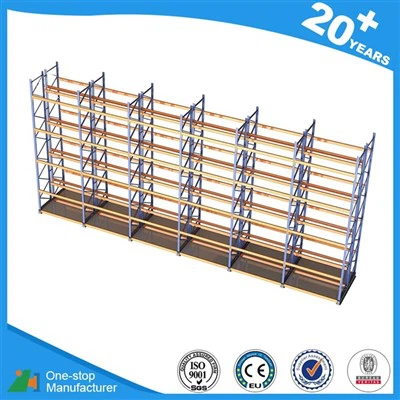
If you’re ready to stop wasting square footage on empty aisles and start maximizing your storage capacity, reach out for a no-obligation consultation to discuss how mobile racking can work for your specific industry and space.
Narrow Aisle Racking References:
National Cold Storage Association. (2023). Energy Efficiency in Temperature-Controlled Warehouses.
Material Handling Industry Association. (2022). Storage Density and Operational Efficiency in Industrial Facilities.
American Library Association. (2021). Space Management for Archival and Library Collections.
U.S. Food and Drug Administration. (2022). Guidelines for Pharmaceutical Supply Chain Storage and Traceability.
Nanjing Jinhui Storage Equipment Co., Ltd.
Nanjing Jinhui Storage Equipment Co., Ltd. is one of the leading mobile racking manufacturers and suppliers in China, engaged in customized service. Feel free to buy the best quality mobile racking for sale here and get quotation from our factory. For price consultation, contact us.
Address: NO.22, Ankang Road, Guli concentrated zone, Nanjing City, China.
E-mail: export@jhrack.com
WebSite: https://www.cn-rack.com/
