If you’re here, chances are you work at a wastewater treatment plant, run sludge hauling, or just deal with municipal sludge that won’t stop messing up your operations. And if you’ve ever stared at a municipal sludge centrifuge at 2 a.m. wondering why it’s throwing off poor cake dryness or shaking like it’s on a festival stage—you’re not alone. I’ve been in your shoes. For the past 12 years, I’ve supplied, serviced, and babysit these centrifuges (and no, they’re not just big spinning buckets—trust me), so I know maintenance isn’t just about “fixing stuff when it breaks.” It’s about catching small issues before they turn into $10k+ emergency repairs and downtime that makes your shift feel like a never-ending nightmare. Let’s break this down like we’re chatting over a coffee (extra shot, obvs), no stuffy jargon, just real stuff that works. Municipal Sludge Centrifuge
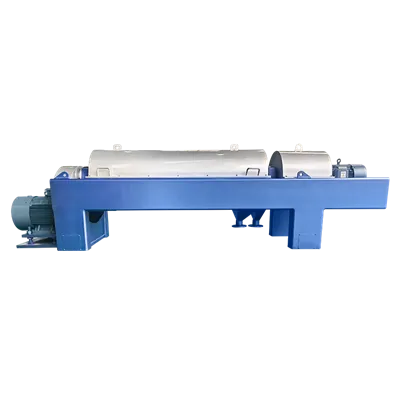
First off, let’s get one thing straight: municipal sludge centrifuges are workhorses. They spin at anywhere from 2,000 to 5,000 rpm, yank water out of that thick, stinky gunk we call primary and secondary sludge, and turn it into something dry enough to haul or even compost. But if you skip maintenance? They’ll eat bearings, tear up scrolls, and leave you with sludge that’s 15% dry solids when it should be 25-30%—meaning you’re paying to haul half water. Not cool.
The best part? Most of this maintenance is stuff you can do without a PhD or a $200/hour service call. I tell all my clients (yep, the ones that actually call when their centrifuge is acting up) to split maintenance into three buckets: daily checks, weekly deep dives, and monthly big-ticket stuff. No complicated spreadsheets—just a simple checklist taped to the control panel. That’s the key, honestly. Consistency beats perfection here.
Daily checks take 10 minutes, tops. You’re not tearing anything apart, just looking and listening. Start with the control panel. Watch the vibration meter—if it’s spiking above the normal range (you’ll know your normal; mine’s usually around 2 mm/s max), that’s a red flag. Most guys ignore this until it’s way too late. Next, listen to the centrifuge. It should make a low, steady hum. If you hear grinding, squealing, or that weird rattle like a soda can full of rocks? Pause. Grinding is usually metal-on-metal, like a worn scroll or bearing. Rattle? Probably loose bolts. Then check the polymer feed. If the mixed fluid going into the centrifuge looks like pancake batter instead of smooth, thin stream, your polymer mix is off—and that means your sludge isn’t flocculating right, so the centrifuge is working way harder than it needs to. Last, peek at the cake discharge. It should be crumbly, like wet potting soil. If it’s runny or slimy? That’s a sign the bowl or scroll is wearing. If it’s too dry? You’re probably over-spinning, wasting energy. Quick, daily stuff that saves you hours of trouble later.
Weekly checks are where you get your hands a little dirty. Nothing major, just pulling off a few covers and checking parts. First, the bowl and scroll clearance. This is the tiny gap between the rotating bowl and the scroll (the part that pushes the dry sludge out). Over time, metal wears down here—if the gap gets too big, sludge can get trapped, which throws off balance. I use a feeler gauge, but if you don’t have one, a thin business card works (it’s ~0.003 inches, perfect for a baseline). If the gap is more than 0.01 inches, that’s time to adjust or repair the scroll. Next, check the lubrication system. Most centrifuges use grease for bearings, and oil for the gearbox. Every week, top off grease fittings on the feed screw and scroll bearing housings—but don’t overdo it. Too much grease can get into the seal and cause contamination, which ruins bearings. For the gearbox, check the oil level with the dipstick. If it’s low, use the manufacturer’s specified oil (no random 10W-30 motor oil—seriously, I’ve seen that go wrong). Also, sniff the oil. If it smells burnt, that’s overheating, and you need to shut down to check for blockages. Then, clean the polymer system. Flush the lines with water for 5 minutes after every week’s run—polymer dries and hardens, like concrete, so if you leave it in the lines, they’ll get clogged and you’ll have to take the whole thing apart. Last, check the drive belt. If it’s cracked, frayed, or shiny (that’s glaze from overuse), replace it. A bad belt can make the centrifuge speed drop, which kills performance. Pro tip: Mark the belt with a Sharpie every week. If the mark stretches or shifts more than ¼ inch, it’s time to tighten or replace.
Now monthly maintenance—this is the stuff that prevents catastrophic failure. You’re shutting the unit down, taking off more covers, and inspecting parts that don’t get much attention. First, check the seals. The feed seal and discharge seal keep sludge and water from getting into the bearings and gearbox. If you see sludge leaking around the seal, that’s a problem. Replace the seal every 6 months to a year, depending on how much you run the unit. I recommend keeping a spare seal on-hand—nothing worse than waiting a week for a replacement when your unit goes out. Next, balance check. Vibration is almost always from unbalanced parts. Every month, mark the bowl and scroll alignment lines. After running the unit for 2 hours, stop it, let it cool, and check if the marks line up. If they’re off by more than 1/8 inch, you need to realign the assembly. Misalignment causes way more wear than any other issue, I swear. Then, inspect the bowl liner. The bowl is lined with hard metal or ceramic to prevent wear from abrasive sludge (primary sludge has lots of grit, right? That stuff chews through metal). Every month, shine a flashlight inside the bowl (after cleaning it out, obviously) and look for scratches or thin spots. If you see deep gouges, you need to resurface or replace the liner. Skipping this will mean the bowl wears unevenly, throws off balance, and eventually seizes up. Last, test the emergency stop. Yeah, I know it’s a pain, but doing this once a month could save you from a disaster. Hit the stop button while the unit’s running (safely, not in the middle of a spin cycle—wait until it’s at low speed) to make sure it cuts power immediately. I’ve had clients skip this and have a bearing seize, the unit keep spinning, and cause a whole lot of damage that would’ve been avoided in 2 minutes.
Wait, let’s talk about the sludge itself, because that’s the elephant in the room. A centrifuge is only as good as the sludge you feed it. If your plant’s sludge has way too much grit (like, from old pipes breaking or excessive sand from stormwater), that grit will act like sandpaper inside the bowl and scroll, wearing them out way faster. I tell all my clients to put a grit removal step before the centrifuge if they don’t already have one. It’s a simple tank that lets grit settle out before sludge goes to the centrifuge, and it adds 20-30% to the lifespan of your bowl and scroll. Also, polymer dosage—too little, and sludge won’t flocculate, so you get runny cake. Too much, and you’re wasting polymer, which adds cost. Most modern centrifuges have automatic dosage control, but if yours is manual, write down dosage rates daily, adjust based on sludge flow, and don’t just guess. I’ve seen guys crank up polymer to fix bad cake and end up with a $500 weekly polymer bill instead of $200. That’s a huge waste.
And what about common mistakes I see all the time? First, ignoring the small stuff. A little vibration one day, a squeal the next—they’re not random. They’re your centrifuge sending a text that something’s wrong. If you answer it immediately, you avoid a $15k bearing replacement. Second, using cheap parts. I know it’s tempting to grab a generic bearing off Amazon, but those are made for lawnmowers, not centrifuges. The right bearing costs $100, a generic costs $30, and it’ll fail in 3 months. That’s $200 total, vs $100 and 3 months of downtime. Not worth it. Third, not training your team. I’ve had clients where a new operator would run the centrifuge at max speed all day, not realizing that slower speed uses less power and reduces wear. Spend 2 hours training everyone on the checklist, and they’ll notice issues a seasoned operator would miss.
Now, what if you don’t have time to do all this? Or you’re not sure how to adjust the scroll clearance, or replace a seal? That’s where I come in. As a municipal sludge centrifuge supplier, we don’t just sell units—we’ve got a team of techs that service and maintain these things every single day. We can set up a custom maintenance schedule for your plant, train your staff, and even do quarterly deep inspections if you don’t have in-house expertise. No pushy sales pitches, just honest advice. Our whole thing is making sure your centrifuge runs like a dream, so you don’t have to deal with the headache of breakdowns.
Wait, let’s wrap this up. The biggest takeaway here is that municipal sludge centrifuge maintenance doesn’t have to be complicated. It’s about small, regular checks, not waiting for the big breakdown. If you stick to that daily, weekly, monthly routine, you’ll extend your centrifuge’s life by 5-7 years, cut your repair costs by 70%, and keep your sludge dewatering running smooth. No more 2 a.m. emergency calls, no more lost productivity, no more paying to haul half water.
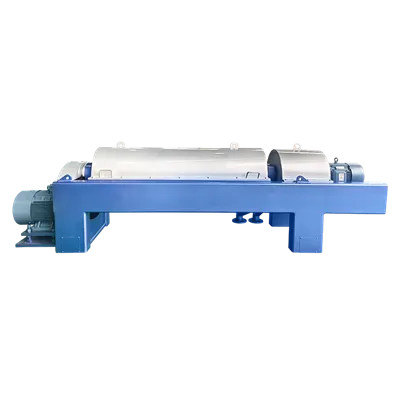
If you’re dealing with a centrifuge that’s acting up, or you want to set up a maintenance plan that works for your plant, reach out. We can walk you through what your specific unit needs, answer any questions, and help you stop fighting your centrifuge and start letting it work for you. Don’t wait until it’s too late—small steps now save big problems later.
3 Phase Decanter Centrifuge References
- American Water Works Association. (2020). Operation of Municipal Wastewater Treatment Plants, 7th Edition.
- Water Environment Federation. (2019). Solids Separation in Wastewater Treatment.
- Sludge Centrifuge Maintenance Best Practices. (2021). Municipal Water & Wastewater Operations Magazine.
Lishui Yuanrong Environmental Protection Equipment Co., Ltd.
As one of the most professional municipal sludge centrifuge manufacturers and suppliers in China, we have world-leading production equipment and strong manufacturing capabilities. Please feel free to buy customized municipal sludge centrifuge from our factory. Also, quotation is available.
Address: Lot 6-1, Block 15, Wanyang Zongchuang City, Lishui, Zhejiang, China
E-mail: 361184920@qq.com
WebSite: https://www.yrhdc.com/
