If you’ve ever ordered a custom box, branded mailer, or protective insert that arrived torn, smudged, or missing a critical structural support, you already know why V Packing quality control isn’t just a checkbox for suppliers—it’s the backbone of trust between a packaging provider and their customers. As a V Packing supplier with 12 years on the job, I’ve seen firsthand how skipping rigorous checks doesn’t just lead to bad reviews; it erodes the partnerships that keep small businesses and large brands alike coming back. Let me break down what V Packing quality control actually is, how we implement it at every step of the production process, and why it’s non-negotiable for both us and our clients. V Packing
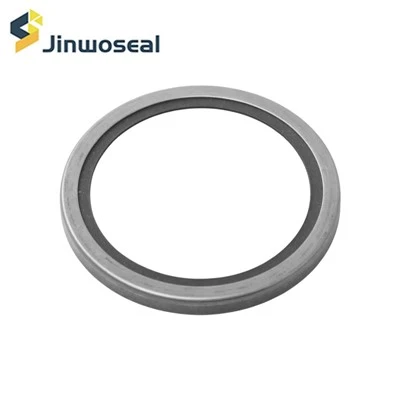
First, let’s clarify what V Packing is, because there’s often confusion around the term. V Packing refers to corrugated packaging that’s scored, folded, and sealed into custom shapes using a “V” fold (or crease) along the edge to create rigidity, stackability, and shock resistance. It’s used for everything from shipping boxes for electronics and furniture to retail display stands and industrial component inserts. The V fold is what sets it apart from regular corrugated boxes: it distributes weight evenly, so a custom V Packing box can hold 50+ pounds without collapsing, even when stacked 10 high on a pallet. But that V fold is also the part that’s most prone to error—mis-score, incorrect fold depth, or a skipped adhesive line, and suddenly that rigid box turns into a flimsy paper bag that can’t protect your product. That’s exactly where quality control (QC) steps in, and it’s not just checking finished boxes at the end of the line. It’s a end-to-end process that touches every part of production, from raw material intake to final shipping verification.
When I started in this industry back in 2011, QC was nothing more than grabbing 10 boxes off the pallet at the end of the week and flipping them over. We’d cross our fingers they held together, and that was it. But after a client lost $40,000 worth of high-end laptop shipments because 300 faulty boxes collapsed during cross-country transit, I realized how reckless that approach was. That loss didn’t just hurt the client—it hurt us, because word travels fast in the packaging industry. Within six months, every major electronics brand in our region was asking about our QC process, not just our pricing. That’s when we rebuilt our entire QC framework around data, consistency, and transparency. Today, V Packing quality control for our operation is split into four core stages: raw material inspection, in-process checks, final finished goods testing, and pre-shipping validation.
Let’s start with raw material inspection, because even the best production line can’t fix bad material. Corrugated board is the heart of V Packing, and not all corrugated is created equal. We source from three local mills, but even so, every batch of board comes with a spec sheet that our QC team reviews before it even enters the factory. We don’t just look at the thickness (which is usually 12mm or 18mm for V Packing, depending on the application)—we test the burst strength, which measures how much pressure the board can take before puncturing, and the edge crush test (ECT), which tells us how much weight the edge of the board can support. For example, a client that needs V Packing for fragile glassware requires an ECT of 32, while a industrial storage box needs an ECT of 44. We also check for surface flaws: smudges from ink, minor dents, or inconsistent color that would mess up a branded retail display. If a batch of board is off spec, we send it back immediately—no exceptions. Early on, we thought this would cost us money, but it actually saved us from countless headaches later. We once turned down a $50,000 order because the board’s burst strength was 10% lower than required; the next week, we heard a competitor that had used that same batch had to replace 2,000 damaged boxes at their own expense. That’s when I learned: good QC isn’t a cost—it’s a investment.
Next is in-process QC, which is where most suppliers cut corners. V Packing requires precise scoring: the V fold line has to be exactly the right depth and width. If the score is too shallow, the fold will crack when assembled; too deep, and the box will lose its rigidity. Our production line runs 24 hours a day, but every two hours, a QC technician pulls 50 boards from the scoring station to measure the fold depth with a digital caliper and test how evenly the fold runs along the edge. We also check the adhesive application: the glue that seals the V fold has to be continuous, no gaps longer than 2mm, and applied at the correct temperature so it bonds in 10 seconds, not 10 minutes. We once had a run of 1,000 display stands where the adhesive was too cold, so it didn’t fully bond overnight—when the assemblers tried to fold them, 40% of the stands split at the seams. We caught that at the two-hour mark, re-calibrated the adhesive heaters, and saved both the order and the client’s deadline. That’s the power of in-process checks: you catch mistakes early, before they become full-order disasters.
Once the boxes are fully assembled, we move to our third stage: finished goods testing. This is more than just counting how many boxes are in a pallet. Every order gets a random sample of 10 boxes (for small runs) or 50 boxes (for large runs) that go through three critical tests: the drop test, the stack test, and the dimensional accuracy check. The drop test: we drop the box from 1.2 meters (the standard for shipping freight) onto each of its six sides, and inside we place a calibrated sensor that measures how much shock the contents would experience. If the sensor shows more than 5G of shock (the threshold for most fragile electronics), the box fails. The stack test: we stack 10 identical boxes on top of the test box, leave it for 24 hours, then inspect for deformation or creasing that would compromise the V fold. For custom display stands, we also test the weight capacity: if a stand is meant to hold 20 retail units, we add 25% more weight to account for variance and check that it doesn’t tip or bend. Dimensional accuracy is another big one: a box that’s 2mm too small might not fit a product, while a box that’s 2mm too large wastes shipping space, which drives up costs for both us and the client. We use a 3D scanner for large runs to ensure every dimension is within 0.5mm of the client’s CAD drawing. Last year, a client tried to skip this test for a large order of V Packing for their new line of smart watches; we insisted on testing, and found that 15% of the boxes were 3mm too narrow. We adjusted the design and re-ran the order, and the client later told us that mistake would have cost them $120,000 in damaged products during their launch. That’s why we never skip finished goods testing—even for clients who pressure us to meet a tight deadline.
The final stage of V Packing quality control is pre-shipping validation, which is often the last line of defense before boxes leave our warehouse. Here, we do a full visual check for branding: if a box has a custom logo, bar code, or warning label, we check for smudges, misalignment, or missing text. For export orders, we also verify that all documentation (customs forms, labeling for hazardous materials, stacking instructions) is correct, because a wrong label can lead to containers being held at ports, delaying delivery for weeks. We also inspect the pallets themselves: boxes have to be stacked evenly, with no overhang, to prevent damage during transit. We once had an export order to Germany where a loader stacked the pallets with 5cm of overhang; a QC inspector caught it before shipping, reordered the pallets, and avoided a $8,000 damage claim from the client. That’s the detail that sets reliable suppliers apart from the rest.
Now, I know what some of you might be thinking: this sounds like a lot of work. How do small businesses with tight budgets and short deadlines manage to do this? The answer is that V Packing quality control doesn’t have to be expensive—it just has to be consistent. For small runs (under 500 units), we use a simpler version of our QC process: sample testing at each stage, a quick drop test, and a visual check. For large runs, we invest in the tools (digital calipers, 3D scanners, shock sensors) because we know they pay for themselves in reduced returns and repeat business. At the end of the day, V Packing’s purpose is to protect a product, and if your packaging doesn’t do that, all the time and money you spent on design and manufacturing goes to waste. I’ve seen brands launch amazing products that failed because their packaging was flimsy, and I’ve seen small businesses grow exponentially because their V Packing was so reliable that customers learned to trust them before even opening the box.
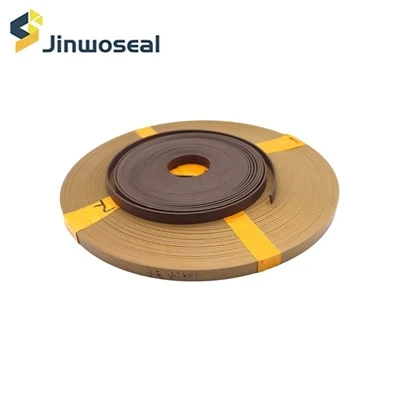
As a V Packing supplier, quality control is our promise. We don’t just sell boxes—we sell peace of mind that your products will arrive safe, on time, and ready for use. If you’re looking for a partner to handle your custom V Packing needs, whether it’s for a small order of branded mailers or a large run of industrial shipping boxes, we’re here to walk you through our QC process, answer your questions, and make sure every part of your order meets your standards. Don’t take a chance on a supplier that cuts corners on quality—reach out to us today to discuss your project and how we can support your business.
SPGW Piston Seal References:
- Corrugated Packaging Association. (2022). Standard Test Methods for V-Fold Corrugated Packaging.
- International Organization for Standardization. (2019). ISO 12048: Packaging – Complete, filled transport packages – Compression test methodology.
- Shock and Vibration Information Analysis Center. (2021). Fragile Product Shipping Guidelines for Protective Packaging.
Hebei Jinwo Machinery Technology Co., Ltd.
Hebei Jinwo Machinery Technology Co., Ltd. is one of the most professional v packing manufacturers and suppliers in China, featured by quality products and good price. Welcome to buy bulk advanced v packing in stock here and get pricelist from our factory. We also accept customized orders.
Address: Room 2109, Tower A, Meidong International, No.16 Guang’an Avenue, Chang’an District, Shijiazhuang City, Hebei Province, China
E-mail: info@jinwoseal.com
WebSite: https://www.jinwoseal.com/
