If you’ve ever stood before a rock garden and felt an immediate sense of calm—like the noise of the day had just melted away—there’s a good chance Zen garden stones played a big role in that feeling. As a long-time Zen Garden Stones supplier, I’ve spent years watching how these simple, weathered rocks turn a basic patch of dirt into a space that feels intentional, meditative, and rooted in quiet. A lot of people assume putting together a rock garden is just stacking rocks haphazardly, but there’s actual method to it—one that honors both the natural shape of the stones and the principles that make Zen gardens work. Whether you’re new to creating one or you’re looking to tweak an existing space, knowing how to use Zen garden stones the right way will make your garden feel less like a DIY project and more like a place meant for reflection. Zen Garden Stones
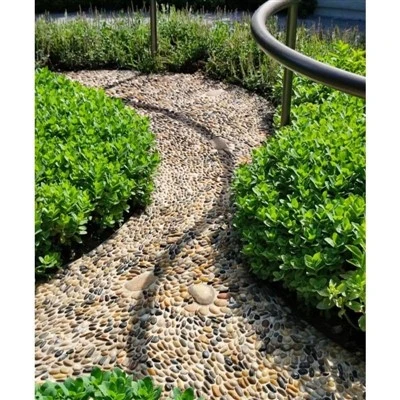
First, you have to pick the right stones, and not all rocks work for this purpose. I see a lot of customers show up looking for big, heavy boulders they found in their backyard, and while those can have a place, they’re not always the best fit for a true Zen garden. Zen garden stones are chosen specifically for their shape, texture, and the way they sit in nature. I typically recommend two main types for most small to medium gardens: river rocks and mountain stones. River rocks are smooth, worn down by water over decades, so their rounded edges feel gentle, not imposing. Mountain stones, on the other hand, have a more angular, rugged look—they feel like they’ve stood tall in high elevations, adding a sense of quiet strength. The key here is to avoid rocks with bright colors or rough, jagged edges unless that’s the intentional vibe you’re going for. Most Zen gardens use neutral tones: grays, soft beiges, and dark earthy browns, because those colors don’t draw the eye away from the rest of the garden’s elements, like raked sand or gravel. When we supply stones to customers, we always sort them by size too—smaller stones (6 to 12 inches) are for accent pieces, medium (12 to 24 inches) for focal points, and larger ones (24 inches and up) for anchors. That sizing matters because it keeps the garden balanced, no matter how big or small your space is.
Once you have your stones, the next step is arranging them, and this is where the Zen principle of “asymmetrical balance” comes in. Unlike a traditional flower bed where you might center a fountain or a statue, Zen gardens feel most natural when no two elements are the same size or shape across from each other. I remember a customer who tried to put two large mountain stones directly opposite each other in a small 8×10 foot space, and it made the garden feel stiff, almost like a hallway. When we swapped one for a medium river rock, the room felt open and calm again. The rule of thirds works really well here too—place your largest focal stone at one of the four corners of the imaginary grid that splits your garden into thirds, not right in the middle. That keeps the eye moving gently around the space, not stopping on one point. It’s also important to leave space between stones, not pack them tightly. Zen gardens are about simplicity, so empty space is just as much a part of the design as the stones themselves. Too many rocks will make the garden feel cluttered, like a pile of rocks instead of a deliberate space.
Another big part of using Zen garden stones is giving them purpose beyond just decoration. Each stone should tell a little story, even if it’s a quiet one. In traditional Zen gardens, stones are assigned roles: there’s the “island” stone, which stands in for a small landmass in the middle of a gravel patch; the “ guardian” stone, which sits to one side to watch over the rest of the garden; and the “path” stones, which are smaller, flatter rocks you can walk on to cross the garden without disturbing the sand or gravel. I always tell customers to name their stones if it helps—even just mentally—because it makes the space feel personal. I had a customer a few months back who used three river rocks as his island, his guardian, and a small meditation spot, and he said that naming them helped him focus when he sat in his garden to breathe. It sounds small, but that personal connection is what turns a rock garden into a Zen garden.
You also have to think about how stones interact with the other elements in your garden—sand, gravel, moss, even small plants. If you’re using moss as a ground cover, smaller river rocks look great scattered around the moss because their soft shape complements the fuzzy texture of the moss. If you’re working with gravel, medium mountain stones make perfect focal points because their rough edges contrast nicely with the smooth, uniform gravel. I often recommend avoiding planting tall shrubs or trees too close to the stones, because roots can push stones out of place over time, and foliage can block the view of the stones. A few small, low plants like moss or creeping thyme are okay, but nothing too big. We supply stones in different sizes to pair with these plants too—small accent stones work great around creeping thyme, adding a little texture at the base of the plants.
Caring for your Zen garden stones is another part of keeping the space meditative. Unlike garden plants that need regular watering, stones just need a little attention to keep them looking their best. We tell customers to wipe down their stones once a month to remove dust and leaves that collect on them—dull, dirty stones don’t have that same calm, natural feel. If your garden has a sandy base, you might find small stones shift a little over time, especially if you walk on path stones. A quick check once a quarter to adjust the positions of the stones so they still feel intentional goes a long way. I always encourage customers to avoid moving the stones too often, though—Zen gardens are supposed to evolve slowly, like nature, so small, occasional adjustments are better than rearranging everything every month.
One mistake I see a lot of people make is trying to overcrowd the garden with stones. I once had a customer who bought 20 different stones from us for a tiny 5×7 foot space, and when he laid them all out, the garden felt overwhelming, like he was trying to pack in too many ideas. The sweet spot is usually three to five stones for a small garden, five to eight for a medium one, and no more than 10 for a large garden. That limit keeps the space simple, which is what Zen gardens are all about. It’s also okay to have just one stone as a focal point if your space is very small—sometimes even a single weathered river rock is enough to make the area feel peaceful.
As a Zen Garden Stones supplier, I’ve also learned that the energy of the stones matters more than their size or price. We source our stones from natural deposits that have been weathered by water and wind for hundreds of years, so each one has a unique shape and texture—no two stones are exactly alike. That’s important because a stone that feels like it belongs in your garden won’t be a perfect, mass-produced shape; it will have little dents, smooth patches, or gentle curves that make it feel familiar, like a piece of nature that’s always been there. When customers come to us looking for stones, I always ask them to visit our warehouse (or our online gallery, if they can’t make it in person) to look at the stones in person. A lot of people pick a stone just by its size, but the one that feels right is the one that draws their eye without them trying.
If you’re thinking of putting together your own rock garden, don’t be afraid to start small. You don’t need a huge backyard or a huge budget. A small patch of sand on a balcony or a corner of your yard, with two or three well-placed stones, is enough to create a little space for calm. The key is to be intentional with every choice—from the stone sizes to their positions to how you take care of them. A Zen garden isn’t about perfection; it’s about creating a space that helps you slow down, even for a few minutes.

If you’re ready to source quality Zen garden stones for your next project, whether it’s a small residential garden, a commercial space, or something in between, I’m here to help. We offer a range of sizes, types, and textures to fit any space, and our team can work with you to pick the right stones for your specific needs. Whether you’re looking for focal point mountains stones, soft river rocks for accent pieces, or durable path stones, we have options that will blend naturally into your garden. Reach out to our team to discuss your project, and we’ll help you find the perfect stones to turn your rock garden into a true Zen space.
Black Landscaping Stones References
- Zen Gardens: A Practical Guide to Creating Your Own, Author: Jane Hirshfield, Publisher: Shambhala Publications, 2018
- The Art of Japanese Rock Gardens: Principles and Practice, Author: Alexander Murray, Publisher: Tuttle Publishing, 2020
- Landscape Design for Small Spaces, Author: Noel Kingsbury, Publisher: Timber Press, 2019
Orin International Trade Co., Ltd.
With abundant experience, we are one of the most professional zen garden stones manufacturers and suppliers in China. We warmly welcome you to wholesale custom made zen garden stones from our factory. If you have any enquiry about cooperation, please feel free to email us.
Address: No.3-1, Shangzhongdi Natural Village, Hexian Village, Shuangta Sub-district, Jiangshan City, Quzhou City, Zhejiang Province
E-mail: atlas@orinstone.com
WebSite: https://www.orinstone.com/
