If you’ve been around EV charging stuff lately, you’ve probably wondered if a regular MCB can actually handle a charging station. As someone who’s been selling miniature circuit breakers (MCBs) for years, I get this question all the time—whether for a home wallbox or a commercial EV charger. Let’s break this down like I’d chat with a customer over a coffee, no boring tech jargon that makes your eyes glaze over. Miniature Circuit Breaker
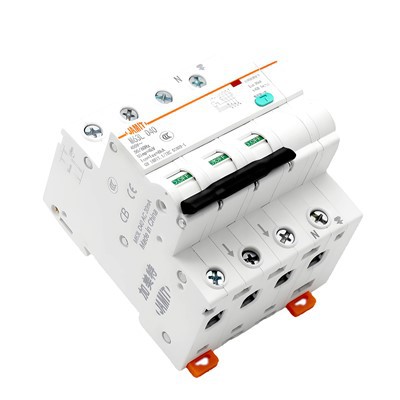
First, let’s get the basics straight. An MCB is that little switch in your electrical panel that cuts power when there’s an overload or a short circuit. It’s not the same as an RCCB (Residual Current Circuit Breaker) or an RCBO—those are for catching electric leakage, right? EV charging stations don’t just pull a steady current, though. When you plug in an EV, the charger and the car talk to each other, adjust power, and sometimes surge. That’s where things get tricky.
A lot of new EV owners try to cut corners and use the same MCB they have for their washing machine or dryer for a home charger. Wait, is that a bad idea? Let’s think about ratings. MCBs come in different current ratings, like 16A, 32A, 40A, even 63A for commercial chargers. EV home chargers are usually 7kW, which is about 32A, right? A standard 32A MCB might handle the continuous load, but here’s the catch: MCBs trip based on two things—overload (too much steady current) and short circuit (a sudden massive surge). But EV chargers have what’s called “inrush current” when you first plug in the car. That’s the big spike when the charger starts up, which can be 5 to 10 times the rated current for a millisecond. A regular MCB that’s too sensitive might trip because of that inrush, even though it’s normal for EVs.
Wait, so is a regular MCB totally useless for EV charging? No, not really. But you can’t just pick any old one. Let’s talk about the right type. There are MCBs with different “trip curves” — B, C, D curves. Oh, right, I’ve had customers mix these up! Curve B trips at 3-5 times the rated current, Curve C at 5-10 times, Curve D at 10-20 times. For most home EV chargers, a Curve C MCB is the sweet spot. The inrush from a 7kW charger is usually around 6 times the rated current, so Curve C won’t trip on that startup spike, but it will shut off if there’s a real overload. Commercial chargers, though, might need Curve D because they have higher inrush. That’s where I see mistakes happen—people grab a cheap Curve B MCB meant for lights, and then wonder why their charger trips every time they plug in their Tesla.
Another point: MCBs aren’t meant to protect against earth faults. If there’s a leak to ground—like a frayed wire touching the charger casing—you need an RCCB to cut power super fast. So some people ask, “Can I just use an MCB and call it a day?” No, you really shouldn’t. EVs have high voltage, so an earth fault isn’t something to mess around with. But here’s the thing: MCBs do work as part of the overall protection setup. They’re the first line against overloads and short circuits, while RCCBs handle the leakage. A lot of electricians will combine an MCB with an RCCB into an RCBO, which does both jobs. But if you’re spec’ing components, the MCB is still essential.
Let’s get into my own experience as an MCB supplier. Last year, I had a small business customer who installed a 22kW commercial charger for their fleet of delivery vans. They tried to use two 32A Curve B MCBs, and for the first week, it worked fine. Then, on a cold morning, every time a van plugged in, the MCB would trip. Turns out, cold weather makes the battery’s inrush current higher—so that Curve B MCB (which trips at 3x the current) couldn’t handle it. They swapped to Curve D MCBs, and haven’t had a trip since. That’s exactly why you can’t just use any MCB; you have to match the type to the charger’s specs.
What about residential vs. commercial? For a home Level 2 charger (7-11kW), a 32A Curve C MCB is standard. Level 3 fast chargers, though, are way higher—like 50kW or more, which pull hundreds of amps. For those, you’d need a larger MCB, maybe 80A or 100A, again with the right trip curve. Commercial sites with multiple chargers will need even bigger MCBs, grouped by the number of chargers. And don’t forget, electrical codes in most places require specific protection for EVs, so you can’t just skip the proper MCB rating.
Wait, some people say “why not just use a fuse?” Fuses work, but they’re one-time use. An MCB is resettable—you just flip the switch back on, which is way more convenient for home and business. And MCBs are more precise; they won’t trip at small overloads, unlike old-fashioned fuses. So in that sense, MCBs are actually better for EV charging than fuses, as long as you get the right one.
Another common question: “Can I use an MCB rated for AC for an EV charger?” Most home chargers are AC, so a standard AC MCB works. But DC fast chargers? Those have DC components, so you need a DC-rated MCB. That’s a thing I see people mess up too—using an AC MCB for a DC charger, which can trip even without a fault because of the DC current. So make sure the MCB is rated for the type of current your charger uses. As a supplier, I always tell customers to check their charger’s manual for the correct MCB type—9 times out of 10, it’ll specify curve, rating, and current type.
Let’s talk about real-world numbers. Let’s say you have a 7kW AC charger, 240V. That’s 29.17A (since power = voltage x current). So you need an MCB rated higher than that, right? A 32A MCB is perfect. But if you use a 20A MCB, it’ll trip every time because it’s overloaded. If you use a 40A MCB, it’s overkill, but not dangerous. The trip curve here is key—if your 32A MCB is Curve C, it won’t trip at 6x (192A) for the inrush, but it will trip at 10x (320A) for a short circuit, which is exactly what you want.
What about mistakes to avoid? Don’t buy cheap, no-name MCBs from Amazon. A lot of cheap MCBs have inconsistent trip curves—they might not handle the inrush, or they trip too easily. As a supplier, I only work with MCBs that meet international standards (IEC 60898, for anyone who cares). Those are tested to have consistent trip characteristics, so you don’t end up with a charger that trips randomly. Also, don’t underrate the MCB—cutting corners on a cheaper lower-rated MCB will lead to more trips, which is frustrating for EV owners.
So to sum up: Can an MCB be used for EV charging stations? Yes, but only the right MCB. You need to match the current rating to your charger’s load, pick the correct trip curve (C for home, D for commercial/ high inrush), make sure it’s rated for AC or DC as needed, and pair it with an RCCB or RCBO for earth fault protection. It’s not a one-size-fits-all deal, but when you get it right, the MCB is a crucial part of keeping your EV charger safe and working smoothly.

If you’re an electrician, a business owner looking to install EV chargers, or just someone who wants to upgrade their home setup, and you need the right MCBs to fit your needs, reach out to us to chat through your requirements. We can help you pick the perfect MCB for your charger, whether it’s a home wallbox or a commercial fleet station.
Residual Current Circuit Breaker References
International Electrotechnical Commission. IEC 60898-1:2019, Circuit-breakers for overcurrent protection for household and similar installations – Part 1: Circuit-breakers for a.c. operation.
Society of Automotive Engineers. SAE J1772: Electric Vehicle Connector and Coupler.
National Electrical Code (NEC). Article 625: Electric Vehicle Charging Systems.
Tianjin JMT Electric Co., Ltd.
Tianjin JMT Electric Co., Ltd. is one of the most reliable miniature circuit breaker manufacturers and suppliers in China, also supports customized service. Please feel free to buy advanced miniature circuit breaker made in China here from our factory.
Address: East Side of Road No.6, Jinghai Economic Development Zone, Tianjin
E-mail: wangbing@tj-jamit.com
WebSite: https://www.jamit-electric.com/
