As a V Ring seal supplier with over two decades of experience working directly with manufacturing, agricultural, and industrial maintenance teams, I’ve lost count of how many times I’ve seen perfectly good equipment fail prematurely—all because of a wrong installation on a part as small as a V Ring seal. V Ring seals aren’t just rubber rings; they’re precision-engineered barriers that keep lubricants in, contaminants out, and extend the life of shafts, pumps, gearboxes, and conveyors. Get their installation right, and you’re looking at years of hassle-free operation. Mess it up, and you’ll be back ordering replacement parts sooner than you planned. That’s why I want to walk you through the step-by-step process I recommend to every client, plus the common mistakes I see again and again that you need to avoid. V Ring Seal
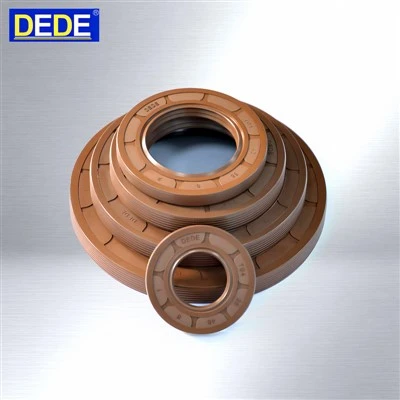
First, let’s start with the prep work, because skipping any of the checks here is the fastest way to run into issues. Too many teams grab a new seal, yank it out of the packaging, and fit it without a second thought to the shaft’s condition. Before you even touch the seal, confirm two critical details: the shaft’s surface finish and dimensional accuracy, and the seal’s compatibility with your application.
For the shaft: V Ring seals rely on a tight, smooth seal between their inner lip and the shaft. If the shaft has rust, scratches, burrs, or a surface finish that’s too rough, the seal’s lip will tear within hours of operation. I always tell technicians to test the shaft by running a clean rag along the surface—if it snags on any irregularity, you need to smooth it. Use a fine-grit emery cloth (220 to 320 grit) or a ceramic honing tool, and always sand along the direction the shaft rotates, not against it. That way, you don’t create new micro-scratches that will abrade the seal. Also, double-check the shaft’s diameter against the seal’s listed inner bore; even a 0.002-inch difference can cause a leak or excessive lip wear. If the shaft is worn down too far (more than 10% of the seal’s inner diameter), you might need a shaft repair sleeve or to machine the shaft back to its original size—don’t just force a larger seal on, that’s a quick fix that will fail.
Next, the seal itself: make sure you have the right seal for the job. V Ring seals come in different materials—nitrile for general industrial use, Viton for high-temperature or chemical environments, silicone for food-grade applications—and different lip designs. A seal meant for a pump will not perform the same on a conveyor shaft. I always keep a few sample seals on hand for clients to check, so they don’t end up ordering the wrong part. Also, inspect the new seal for defects before you start: look for cracks, uneven lips, or leftover molding flash from the manufacturing process. A tiny burr on the seal’s lip is easy to miss, but it will create a leak path once the equipment is running.
Once the prep work is done, it’s time for the installation steps. The first rule here is never to hammer the seal directly. V Ring seals are made of rubber or a polymer, and a metal hammer can crack the seal, bend the metal core (many V Ring seals have a metal reinforcement for rigidity), or push the lip out of alignment. Instead, use a custom installation tool or a soft drift—like a block of wood, a plastic punch, or even the smooth handle of a screwdriver—to apply even pressure around the seal’s outer diameter. The goal is to seat the seal flush with the housing face, not below or above it. If the seal is set too far into the housing, the lip will not make proper contact with the shaft. If it’s sitting proud, it can get caught on other components during assembly and tear.
Next, when fitting the seal to the shaft, make sure you don’t stretch the inner lip beyond its limits. V Ring seals are designed to fit a specific shaft diameter; stretching them more than 5% will cause the lip to lose its tension, leading to leaks. If the shaft is smaller than the seal’s inner bore, don’t force the seal over the shaft—use a lubricant to help it slide. The lubricant here should be compatible with both the seal material and the equipment’s operating environment. For most nitrile seals, a light coat of mineral oil or a food-grade lubricant (if it’s a food application) works well. Avoid petroleum jelly or heavy greases, because they can degrade rubber over time. Also, don’t lubricate the seal’s outer diameter, just the inner lip and the shaft—too much lube can get trapped inside the housing and cause contamination.
After the seal is installed, there’s one final check that many teams skip: the lip preload. The preload is the tension in the seal’s inner lip that keeps it pressed against the shaft. Too little preload, and the seal won’t stop leaks. Too much preload, and it will wear out the shaft prematurely and generate excess heat. To check preload, you can use a feeler gauge to measure the gap between the seal’s outer edge and the housing face, or (for a quick visual) spin the shaft by hand after installation. If it turns smoothly with no resistance, the preload is too low. If it’s hard to turn, you’ve got too much preload and need to adjust. That adjustment might mean checking if the seal is seated evenly, or if you used the wrong size seal.
Now, let’s talk about the common mistakes that turn a simple installation into a costly problem. First, ignoring the housing’s condition. The seal sits in a housing, and if the housing has burrs, rust, or a uneven surface, the seal’s outer edge will get damaged when you install it. I always recommend cleaning the housing with a degreaser and a rag before any installation, and using a de-burring tool to smooth any sharp edges on the housing’s bore or face. Second, installing the seal backwards. V Ring seals have a distinct orientation: the lip should face the fluid or contaminant you’re trying to block. If you install it backwards, it will act like a suction cup instead of a barrier. For example, a seal meant to keep oil inside a gearbox should have its lip facing the oil—never the other way around. Third, not accounting for operational conditions at installation. If your equipment runs at high speeds (over 3,000 RPM), you need a seal with a low-friction lip coating, because a standard nitrile seal will generate too much heat and wear out. If the environment is dusty, you need a seal with a dust lip to keep out particulate matter, not just a basic radial seal.
Wait, I also want to mention thermal expansion. V Ring seals will expand and contract with temperature changes. If you’re installing a seal in a cold environment and the equipment will run at high temperatures, you need to account for that expansion. Choosing a material that can handle the temperature range (Viton for up to 400°F, silicone for up to 500°F, but nitrile maxes out around 250°F) is just as important as the installation.
Finally, after installation, a quick test run is a good idea. Run the equipment at low speed for 10 to 15 minutes, then shut it down and check the seal for leaks, heat, or unusual noise. If you notice a leak, don’t panic—turn off the equipment, take it apart, and check if the seal was installed correctly, if the shaft has any damage, or if you used the wrong size. Most leaks after installation are fixable without replacing the seal, but catching them early will save you downtime later.

As a V Ring seal supplier, I’ve seen every installation scenario—from a farm team replacing a seal on a tractor pump to a factory maintenance crew outfitting a new conveyor system. The ones that last are the ones that take the time to prep, install with care, and check every step. If you have questions about selecting the right V Ring seal for your application, or need more detailed guidance on installation, don’t hesitate to reach out to our team for a consultation. We’re here to make sure your V Ring seals work as hard as you do.
Other Standard Oil Seal References
- Shaffer, L. (2019). Sealing Technology for Industrial Machinery. Industrial Press Inc.
- American Society of Mechanical Engineers (ASME). (2021). Standard Practice for Fluid Sealing Components. ASME International.
- Smith, J. D. (2020). Polymer Seals: Installation, Materials, and Performance. CRC Press.
DEDE SEAL Co., Ltd.
DEDE Seal Co., Ltd. is one of the most experienced v ring seal manufacturers and suppliers in China for over 35 years, featured by quality products and good price. Please feel free to buy bulk customized v ring seal made in China here from our factory. Welcome to contact us for pricelist.
Address: Hunan Road, Pudong New Area, Shanghai, China
E-mail: info@dedeseal.com
WebSite: https://www.dedesealing.com/
