Hey everyone, it’s Jake from your go-to brown kraft paper supplier, and today we’re diving into a question that comes up all the time from customers—especially folks who use kraft paper for packaging, crafting, or shipping: What’s the stretchability of brown kraft paper? If you’ve ever tried to stretch a sheet of kraft paper without tearing, you know it’s not like elastic fabric or plastic wrap. But it’s also way more flexible than, say, a regular printer paper. Let’s break this down like we chat in our warehouse break room, no stuffy science jargon (promise). Brown Kraft Paper
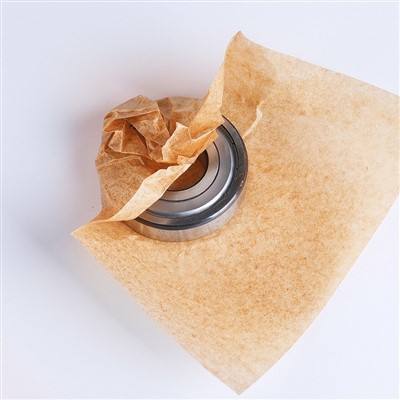
First off, let’s get one thing straight: stretchability here isn’t “how far can you pull this paper before it breaks?”—it’s a specific, measurable property that tells you how much a kraft paper sheet can elongate under tension before it reaches its breaking point. Think of it like this: when you pull a sheet gently, it’ll stretch a little, but pull too hard, and it snaps. That “little” is what we’re talking about. Now, why does this matter for you? If you’re wrapping irregularly shaped products, making custom mailing bags, or even doing DIY crafts where you need the paper to contour to a shape without tearing, stretchability is make-or-break. No one wants a shipment of fragile items arriving because your kraft packing paper tore mid-wrap, right?
So what’s the actual number we’re looking at? Most standard brown kraft paper (the stuff we supply in rolls for packaging) has a stretch elongation of 2-5% when tested in the machine direction (that’s the direction the paper is made on the production line) and 10-20% in the cross direction (perpendicular to the machine direction). Wait, that’s a big difference—why? Because kraft paper is made from wood pulp fibers that get aligned during manufacturing. The machine direction (MD) has fibers lined up, so it’s stiffer and stretches less, while the cross direction (CD) has fibers more scattered, so it’s way more flexible. If you’ve ever ripped a sheet of kraft paper along the grain vs. against it, that’s exactly why that happens. Rip with the grain, it tears easy (less stretch); rip against it, it’s tougher and gives a little more.
Now, not all brown kraft paper is the same, and stretchability changes depending on a handful of factors. Let’s talk about the ones we deal with every day at the warehouse:
-
Pulp type: We make most of our kraft paper from softwood vs. hardwood pulp. Softwood fibers are longer and stronger, right? So they tend to give a bit more before breaking, which bumps up stretchability. Hardwood fibers are shorter, so the paper is stiffer, lower stretch. If you’re using our heavy-duty shipping kraft (the 40-60 lb weight stuff), that’s softwood-heavy, so stretch is around 4-6% MD and 15-22% CD. For lighter, 20-30 lb craft kraft, which uses more hardwood, it’s more like 2-4% MD and 8-12% CD.
-
Paper weight (basis weight): The “lb” number you see on rolls (like 30 lb, 50 lb) is how much a ream of 500 sheets weighs. Heavier kraft paper has more fibers packed together, so it’s less stretchy. Thin, light kraft is floppy and stretches way more—we’ve had customers use 20 lb kraft for gift wrapping, and they say it feels almost like thin tissue paper when you pull it, stretch up to 15% CD. But that same paper is terrible for shipping because it tears too easy. Balance is key here.
-
Manufacturing process: We use unbleached kraft (that’s the classic brown color) which is processed with the kraft pulping method—this uses chemicals to break down wood, leaving strong, intact fibers. If a paper is “sulfite pulped” instead, fibers are weaker, so stretch is lower. Also, calendering (the process where we roll paper through heated rollers to make it smooth) can make the paper tighter, so less stretch. We leave most of our standard kraft paper a little less calendered so it keeps that natural flexibility—you’ll notice it feels softer to the touch than some cheap, super smooth kraft from big box stores.
-
Moisture content: This is a big one we sometimes forget to mention! Kraft paper absorbs moisture from the air, so if it’s stored in a humid warehouse (or your garage), it gets a little damp. Wet fibers are more flexible, so stretchability goes up—we’ve seen damp kraft stretch 2-3% more in MD than dry kraft. But too much moisture? It weakens the fibers, so it breaks easier. Conversely, dry kraft (like when it’s stored in a heated, dry space) is stiffer, lower stretch, more prone to tearing if you pull it too hard. That’s why we recommend storing our rolls in a cool, dry place—keeps the stretch consistent.
Now, let’s put this into real-world use cases, because numbers don’t mean squat if you don’t know how they apply to your work.
If you’re an e-commerce brand packing irregular items like pottery, handbags, or electronics: You want kraft paper with decent stretch so it can conform to the shape of the product without tearing. Our 50 lb heavy-duty kraft has 5% MD stretch and 18% CD stretch—perfect for wrapping odd shapes tight. If you tried to use a 20 lb kraft here, it’d stretch too much (10% CD) but would tear when you pull it to wrap around a sharp edge like a pottery rim. The heavy stuff holds its stretch better, so you get a secure wrap without snags.
If you’re a crafter making paper mache, gift bags, or flowers: You need stretch to mold the paper into shapes. Our 30 lb craft kraft is great here—12% CD stretch, so you can fold it into a bag without it cracking. For paper mache, you want a little give so the paper can lay over a balloon or mold without breaking, which the moderate stretch of kraft works way better than stiff printer paper (which has almost 1% stretch—super rigid, tears immediately).
If you’re moving freight and need kraft for pallet wrapping or cushioning: You want higher tensile strength and controlled stretch. Our 60 lb industrial kraft has 3% MD and 20% CD stretch—stretches just enough to wrap tightly around a pallet, but not so much that it loosens up as the truck jostles. Cheap kraft from no-name suppliers often has lower stretch, so it snaps when you try to pull it tight around a pallet, leaving your boxes exposed.
Wait, but what about when people ask, “Can I stretch kraft paper like plastic wrap to cover a box?” No, not really. Kraft paper isn’t designed for that—its maximum stretch is way lower than stretch film, which can stretch up to 300%+. But for light-duty, temporary covering (like covering a table for a craft fair), a roll of 25 lb kraft can stretch a couple of inches over a small table without tearing, which is handy.
Now, let’s address a common myth: “Thicker kraft paper always has more stretch.” Nope! We had a customer last month who bought 70 lb kraft thinking it’d be super stretchy, but it was only 2% MD and 10% CD. Why? It was made with a lot of filler (like clay) to make it extra thick, which weakens the fibers. We don’t add fillers to our kraft—100% virgin softwood pulp means the thickness comes from more fiber, not filler, so stretch stays consistent. That’s why our customers keep coming back—no hidden junk in the paper, just good, stretchy kraft that works.
Another thing to note: Stretchability is different from elongation at break, which is the total amount it stretches before it snaps. For example, our 40 lb shipping kraft has an elongation at break of 7% MD, meaning it can stretch up to 7% of its original length before breaking. That’s more than a standard printer paper, which only has about 1-2% elongation at break. So kraft is way more forgiving when you pull it gently.
We run tests on every roll we ship, by the way. Not just random checks—we have a tensile tester in our warehouse that pulls a small sample of kraft paper until it breaks, measures how much it stretched, and logs it. That’s how we make sure you’re getting the right stretch for your needs. If you’re not sure which weight is best for your project, just ask our team—we’ll walk you through the stretch numbers for each grade.
So, to wrap this up (pun totally intended): The stretchability of brown kraft paper ranges from 2-5% in the machine direction and 8-22% in the cross direction, depending on pulp type, weight, and manufacturing. It’s not elastic, but it’s the perfect balance of flexibility and strength for most packaging, crafting, and shipping needs. The key is matching the stretch grade to your specific use case—too low, and it tears; too high, and it’s too floppy to work with.
If you’re a business looking to stock up on brown kraft paper rolls that have consistent, reliable stretch (no more tearing shipments or flimsy craft paper), we’ve got you covered. We carry all grades from light 20 lb craft to heavy 70 lb industrial, with stretch specs tailored to different uses. Hit up our team to chat about your project, tell us what you’re wrapping or crafting, and we’ll point you to the right kraft paper with the stretch you need. Don’t waste time on cheap kraft from suppliers that cut corners—get a product that works for you, every time.
Insulation Paper References:
- Technical Association of the Pulp and Paper Industry (TAPPI). (2021). Tensile Properties of Paper and Paperboard (Test Method T494 om-21).
- Smook, G. A. (2016). Handbook for Pulp & Paper Technologists (4th ed.). Angus Wilde Publications.
- Kraft Paper Association. (2022). Unbleached Kraft Paper: Properties and Applications.
- U.S. Department of Agriculture (USDA). (2020). Wood Pulp Fiber Characteristics and Paper Performance.
Senzo New Material Group Co., Ltd.
As one of the most professional brown kraft paper manufacturers and suppliers in China, we also support customized service. Please rest assured to buy high quality brown kraft paper made in China here from our factory. For price consultation, contact us.
Address: Dongying Bonded Area, Shandong, P. R. China
E-mail: info@aonuochina.cn
WebSite: https://www.senzopaper.com/
