If you’ve ever wondered how your phone’s screen registers a light tap, or how a robotic arm gently wraps around a fragile wine glass without crushing it, you’re looking at capacitive force sensors doing their thing. As a force sensor supplier, I get tons of questions from engineers, product designers, and even hobbyists who want to know why these tiny, unassuming sensors are everywhere these days—and how they actually work. No stuffy textbook jargon here, let’s break it down like we’re chatting over a coffee about our favorite sensors. Force Sensor
First off, let’s start with the basics: what’s a capacitive sensor, anyway? Capacitance is just fancy physics talk for the ability of two conductive surfaces to store an electric charge, right? Think of a AA battery, but instead of chemical energy, it holds electrical energy between two parallel plates, separated by something non-conductive (called a dielectric). That’s the core of every capacitive sensor. Now, the “force” part of a capacitive force sensor just means we’re measuring how much those two plates press together (or pull apart) when force is applied. Unlike old-school strain gauges that measure tiny stretches in metal, capacitive sensors are fast, sensitive, and don’t need much power—perfect for everything from smart watches to factory robots.
Let’s get into the step-by-step of how it works, and I promise to keep it real. Most off-the-shelf capacitive force sensors you’ll work with are super thin, often just a few millimeters thick, which is why they’re easy to tuck into gear or machinery. Here’s the simple breakdown: you’ve got two conductive electrodes (usually made of something like copper or silver, printed on flexible plastic or even thin rubber), and between them is that dielectric layer—often a soft, compressible foam or silicone rubber. That’s the magic middle guy. When there’s zero force applied, the two electrodes are separated by a set gap, so the capacitance is at a steady, baseline level. It’s like a pool holding a specific amount of water; that’s your default state.
Now, apply a little force—say, pressing on the top of the sensor. That foam dielectric squishes, so the distance between the two conductive plates shrinks. Wait, capacitance actually depends on three things: the area of the plates, the distance between them, and the permittivity of the dielectric (how well it stores charge). For most force sensors, we keep the plate area and dielectric permittivity the same, so when the gap gets smaller, capacitance goes up. The more force you apply, the more you squish the dielectric, the closer the plates get, and the higher the capacitance reads. That’s the signal we pick up with tiny electronics, convert it into a number, and boom—you know exactly how much force is being applied.
Wait, but hold on—what about when you pull instead of push? A lot of people don’t realize capacitive force sensors can measure tension too, not just compression. If the dielectric is replaced with a stretchable material, pulling on the sensor stretches the gap between the plates (or changes the overlap area if the plates are offset), which also changes capacitance. So whether you’re squeezing (compression) or pulling (tension), the sensor spits out a consistent force reading. That versatility is why so many of our customers use them for both consumer tech and industrial gear.
Let me give you a real example to make this stick. Last quarter, we supplied sensors to a company making smart kitchen scales. Those scales don’t just tell you how heavy your apples are—they can even tell if you’re pressing too hard when you slice them, which is a safety feature. The sensor in the scale is a 1cm round capacitive sensor: when you set the apple on it, the weight (which is a force) squishes the foam dielectric, the plates get closer, capacitance rises, and the electronics translate that into a weight reading accurate to 0.1 grams. That’s the kind of precision you can’t get with a cheap old spring scale, and it’s all thanks to that simple physics.
Now, why do some people swear by capacitive force sensors over other types? I get asked this all the time. Strain gauges, for example, are reliable but they’re slow, and they need to be mounted to a rigid surface to work—no good if you’re building a flexible robot gripper. Piezoelectric sensors are fast, but they only measure dynamic force, not constant pressure (you can’t hold a weight on a piezo sensor and get a stable reading after a second or two). Capacitive ones? They work for both static and dynamic force, they’re thinner, more energy-efficient, and way more sensitive to tiny changes. A good capacitive sensor can pick up a force as light as a few millinewtons—like the weight of a single grain of rice. That’s why they’re in everything from medical devices (like exoskeletons that adjust to a patient’s grip) to gaming controllers (the trigger force you feel when you pull a controller’s trigger is measured by a capacitive sensor).
But wait, it’s not all smooth sailing. Capacitive sensors have some quirks that people don’t always mention, and as a supplier, I always tell new customers to watch for these. First, cross-talk—if two sensors are too close to each other, their electric fields can overlap, so they’ll give false readings. That’s easy to fix with shielding (like a tiny metal layer around the sensor block) but it’s something to keep in mind when designing your layout. Second, temperature drift. The dielectric material can expand or contract a little when it’s hot or cold, which changes the gap between the plates and messes with the capacitance. Most good sensors have built-in calibration to fix that, but it’s why you shouldn’t skip calibrating your system after you install the sensors. Third, humidity—if water gets between the plates (or on the surface of the sensor), it can act as an extra dielectric, throwing off readings. That’s why we use coated, sealed sensors for outdoor or humid applications, like agricultural equipment that measures force on harvesting tools.
I also get a lot of questions about how capacitive sensors compare to tactile sensors, since people mix the two up all the time. Tactile sensors (sometimes called pressure sensors) usually measure a whole surface of pressure, like how a touchscreen tells the shape of your finger. Capacitive force sensors are single-point (or multi-point) sensors that measure the amount of force at a specific spot. So if you need to know “how hard is the robot’s finger pressing this workpiece?”, you use a capacitive force sensor. If you need to know “what’s the shape of the object the robot is holding?”, you use a tactile sensor. They work great together, too—we often supply both for robotic gripper projects so engineers get both force and shape data.
Let’s talk about a cool under-the-radar use case that I love: prosthetics. A client of mine makes a myoelectric hand for amputees, and they installed three small capacitive force sensors in each finger. When the amputee wants to pick up a glass, the sensors measure how much force each finger is applying, so the hand doesn’t squeeze too hard and break the glass. Before they switched to capacitive sensors, their old system was laggy and inaccurate—now the hand adjusts in less than 10 milliseconds, which is almost as fast as a real human hand. That’s the kind of impact sensors have, beyond just gadgets.
Now, for anyone looking to actually use these sensors: what do you need to know before ordering? First, think about your force range. Capacitive sensors come in all sizes, from ultra-sensitive ones that measure 0-10 grams for medical devices, to heavy-duty ones that measure up to 1000 Newtons for industrial presses. If you order a sensor rated for 1000N when you only need 10N, you’ll waste money on overkill that’s less accurate for small forces. Second, flexibility: do you need it flat, curved, or stretchable? We make sensors that conform to curved surfaces, like the inside of a robot arm, so it’s not a flat rigid block. Third, environmental conditions: is it going to be outdoors, wet, or exposed to dust? We have IP67 sealed sensors for harsh environments, and bare ones for indoor low-dust applications.
As a force sensor supplier, I see a lot of people go into their first project with capacitive sensors thinking they’re too complicated, but honestly, once you get the hang of it, they’re pretty straightforward. The biggest mistake I see is skipping calibration—without calibrating your sensor to your exact application, you’ll get readings that are off, sometimes by 10% or more. It doesn’t have to be hard, though: most sensor modules come with a simple calibration script, or you can do a two-point calibration (press with a known light force and a known heavy force) to set the baseline.
Another common question: are capacitive sensors expensive? Compared to other high-precision sensors, they’re pretty accessible. A small 5N capacitive force sensor for consumer products costs a few bucks, and even industrial-grade ones are way cheaper than piezo or strain gauge sensors for most applications. That’s why they’ve exploded in popularity in the last 5 years—what used to be a niche industrial sensor is now in everything from smart watches to drones to baby scales.
Wait, let’s circle back to the core physics to make sure I didn’t skip anything. Capacitance is calculated with the formula C = εA/d, where C is capacitance, ε is permittivity, A is the area of the plates, and d is the distance between them. So if d (gap) gets smaller, C gets bigger—basic algebra, right? That’s why force directly translates to capacitance. Some people add a variable dielectric, too—instead of a uniform foam, they use a dielectric that changes permittivity when squished, which can make the signal even more sensitive. But for most applications, the gap change is enough.
I should also mention that there are two main types of capacitive force sensors: parallel plate (which we’ve been talking about, the most common) and interdigital. Interdigital sensors have two sets of conductive fingers that weave into each other, instead of flat plates. They’re good for very thin applications, like foldable phone screens, because they’re more flexible. The physics is similar, but instead of changing the gap between plates, you change how much overlap there is between the fingers when force is applied. It’s just a different design for tight spaces.
Now, if you’re reading this and you’re thinking about integrating capacitive force sensors into your next project—whether it’s a new consumer gadget, a robotic arm, a medical device, or even a farm tool—let me be the first to say, we can help. I’ve worked with engineers at startups and big corporations alike, from prototyping custom sensors to scaling up for mass production. No matter if you need a tiny 1mm sensor for a smart pen grip, or a large 10cm sensor for a forklift pressure pad, we can build something that fits your needs. We don’t do one-size-fits-all; we tailor each sensor to your force range, size, flexibility, and environment, so you don’t have to compromise on performance.
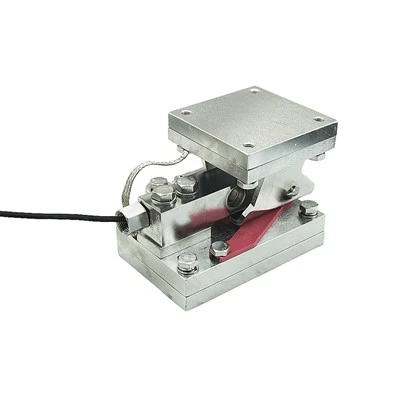
Don’t waste time guessing if capacitive sensors are right for your project. They’re fast, accurate, versatile, and affordable, and they’re already powering so many of the technologies we use every day. If you’ve got a question about force sensing, need a custom quote, or want to talk through your project, reach out to our team. We’re here to help you pick the right sensor, troubleshoot any issues, and make sure your project works perfectly.
Industrial Scales References
- Fraden, J. (2016). Handbook of Modern Sensors: Physics, Designs, and Applications. Springer.
- "Capacitive Force Sensors: Design and Applications." IEEE Sensors Journal, vol. 18, no. 12, 2018, pp. 4789-4801.
- Wilson, D. G. (2020). Flexible Capacitive Sensors for Wearable and Robotic Systems. Journal of Micromechanics and Microengineering, vol. 30, no. 9, p. 093001.
Yixing Silvanus Electric Manufacture Co., Ltd.
With abundant experience, we are one of the most professional force sensor manufacturers and suppliers in China. We warmly welcome you to buy bulk advanced force sensor in stock here and get pricelist from our factory. All customized products are with high quality and competitive price.
Address: No.30 Fukang Road, Xinjie Street, Wuxi, Jiangsu, China
E-mail: jacky@silvanus.cn
WebSite: https://www.kunsens.com/
