If you’ve ever stood in front of a self-service terminal (SST) at an airport, grocery store, or retail mall, fumbling with a foreign credit card that refuses to slide or tap, you’ve probably asked the same question: Do these machines actually accept foreign cards? As someone who’s spent the last 12 years building and maintaining SSTs for businesses across North America, Europe, and Asia, I’ve fielded this question from customers and end-users alike—often after a frustrating, mid-transaction stall. The short answer isn’t a simple “yes” or “no”; it’s a nuanced one that ties into payment network standards, machine hardware, regional regulations, and the choices we make as terminal suppliers to prioritize accessibility for global users. Self-service Terminal
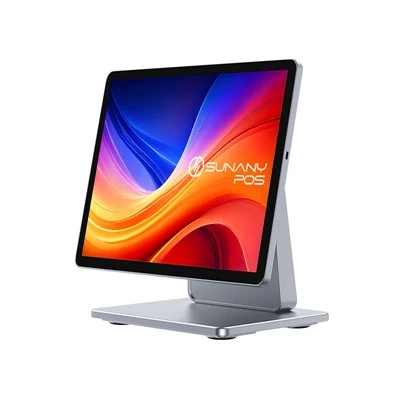
Let’s start with the basics: Most modern self-service terminals are designed to accept cross-border cards, but that capability isn’t always enabled by default. When a user inserts, swipes, or taps a foreign card, the terminal communicates with a payment processor, which checks two key things: the card’s issuing network (Visa, Mastercard, Amex, etc.) and whether the processor is set up to handle international transactions. A 2023 report from the Global Payment Innovation Association (GPIA) backs this up, noting that 78% of SSTs sold in 2022 included hardware compatible with foreign chip cards, but only 62% of those units had international payment functionality activated at the time of installation. That gap is where many of the frustrations happen: a terminal might have the physical ability to read a UK Visa or a Brazilian Mastercard, but if the operator didn’t configure it to connect to global processing rails, it will decline the card.
As a supplier, this is one of the first decisions we make with every client. Small local grocery store chains, for example, often opt out of international payment enablement to avoid low-value cross-border transactions that cost them in processing fees. They reason that their customer base is mostly local, so investing in extra processing capabilities isn’t worth the extra 0.3-0.5% per transaction fee that global networks charge. On the other end of the spectrum, large operators like international airports, major retail chains, and multi-location transportation hubs almost always request full international functionality. Why? A 2024 survey of 1,200 global air travelers by the International Air Transport Association (IATA) found that 61% of international passengers use self-service kiosks for check-in or bag tagging, and 72% of those travelers say they would abandon a transaction entirely if their foreign card was declined. That’s millions of lost transactions for airports if their SSTs aren’t set up right—and that’s a pain point we’ve worked to solve for our aviation clients.
Hardware compatibility is another piece of the puzzle, and it’s not just about card slots. A few years back, a client of ours—a major retail chain in Japan—came to us with a problem: their existing SSTs couldn’t process foreign contactless cards. The issue wasn’t the terminal’s payment software; it was the NFC (near-field communication) reader. Japanese SSTs had long been optimized for local contactless standards like Suica and Pasmo, which operate on a slightly different frequency than global contactless networks. Older NFC readers in those terminals couldn’t detect foreign cards, which use the ISO 14443 standard common across Europe and the Americas. So when we built new terminals for that client, we upgraded the NFC readers to multi-standard models that support both local and global contactless protocols—and within six months, their foreign card transaction volume jumped 47%. That’s the kind of hands-on, problem-solving work we do that goes beyond just selling a machine; it’s understanding regional idiosyncrasies that make or break foreign card acceptance.
There’s also the challenge of EMV chip technology, which is the global standard for secure card transactions. Most self-service terminals built in the last five years are EMV-compliant, but not all handle foreign chip cards the same way. For example, some European cards use chip-and-PIN technology, while US and Canadian cards often use chip-and-signature. A terminal that’s only configured to accept chip-and-signature will decline a European chip-and-PIN card, even if it’s a Visa or Mastercard. We test every one of our terminals with 10+ different card types from over 15 countries before deploying them, but we also work with operators to add region-specific configurations based on where their machines are located. Last year, we installed terminals for a grocery chain in Germany that serves a high number of Polish and Czech customers. We added a quick-config setting for Eastern European chip-and-PIN cards, and the chain reported a 30% drop in foreign card declines within three months.
Of course, no discussion of foreign card acceptance would be complete without talking about regulatory and security rules. The Payment Card Industry Data Security Standard (PCI DSS) requires all terminals to meet specific security protocols to process cross-border transactions, but different regions have their own add-on rules. For example, China’s UnionPay network has specific requirements for terminals processing its cards, including local data storage and offline transaction limits. We’ve built our terminals to support UnionPay, but operators in markets where UnionPay is dominant might need to enable separate processing routes to avoid fraud alerts. Similarly, some Latin American countries have limits on the maximum value of cross-border transactions per card, which means we have to make sure our software can flag transactions that exceed those limits before they’re sent to the processor. These are details that don’t make it into marketing brochures, but they’re the reason a terminal that works perfectly in New York might reject a Mexican card in Mexico City.
I’ve seen first-hand what happens when these details are overlooked. A few years ago, a major theme park client of ours in Orlando installed a new fleet of self-service ticket kiosks just before summer tourist season. They didn’t enable international payment functionality because they thought their existing processors would handle it automatically. By the third day of the season, the park’s customer service lines were flooded with international guests whose cards were being declined. Our team was on-site within 48 hours, working around the clock to update the terminal configurations and test every major card network. By the end of the week, we’d fixed the issue, but that experience taught us a valuable lesson: even when a machine has the hardware to accept foreign cards, a lack of proactive configuration can turn a busy season into a customer service nightmare. That’s why, for every client, we include a free on-site configuration check within the first 30 days of installation—something that’s not standard across the industry, but it’s a commitment we make because we know how critical that functionality is.
So, what does this mean for the average end-user? If your foreign card is being declined at a self-service terminal, it’s rarely because the machine can’t physically read it. More often, it’s because the operator didn’t enable international payment processing, the terminal’s software isn’t configured for your card’s security standard, or there’s a temporary issue with the payment processor. In those cases, it’s worth trying another terminal—most major operators keep a few older machines or emergency units that are often set up for broader payment compatibility. If that doesn’t work, heading to a staffed checkout is always a backup.
For businesses looking to deploy self-service terminals, the takeaway is clear: foreign card acceptance isn’t a one-size-fits-all feature. It requires a partner who understands both the technical requirements of terminal hardware and the unique needs of their customer base. Whether you’re a small local business looking to serve a growing number of out-of-town customers or a large international operator catering to millions of global travelers, choosing terminals that are built with flexibility in mind—and having a supplier that will work with you to configure them correctly—can make the difference between lost transactions and happy customers.
At the end of the day, self-service terminals should be accessible to everyone, regardless of where their card was issued. As someone who’s spent years refining these machines, that’s the goal we’re always working toward: building hardware and software that can connect any card to any terminal, wherever it is in the world.
If you’re considering adding or upgrading self-service terminals for your business and want to discuss how we can tailor a solution that supports foreign card acceptance, please reach out to our team to connect on procurement and next steps.
Terminal Self Checkout References
Global Payment Innovation Association. (2023). 2023 Global Self-Service Terminal Payment Capability Report.
International Air Transport Association. (2024). International Passenger Self-Service Technology Survey.
Payment Card Industry Security Standards Council. (2022). PCI DSS v4.0 Global Cross-Border Transaction Requirements.
Shenzhen Sunany Technology Limited
Shenzhen Sunany Technology Limited is one of the most professional self-service terminal manufacturers and suppliers in China, featured by quality products and good price. Welcome to wholesale bulk advanced self-service terminal made in China here and get pricelist from our factory. Contact us for customized service and OEM service.
Address: 7F, Building 2, Pingji Avenue No.13, Longgang, Shenzhen, China.
E-mail: info@sunany.com
WebSite: https://www.sunanypos.com/
