When I first launched my flexible stone supply business three years ago, I made a rookie mistake that kept me up at night: I limited my sales pitch to interior walls. Back then, I thought flexible stone was just a lightweight alternative to heavy marble for accent walls, vanity tops, and kitchen backsplashes. I lost a big project to a competitor because I couldn’t answer a simple question from a commercial builder: “Can I use this stuff for exterior?” That interaction forced me to dig through material science research, test products in real-world conditions, and learn how flexible stone’s unique properties make it useful for far more than interior walls. Today, I’m here to set the record straight: flexible stone isn’t just an interior design material. It’s a versatile, durable option that works across both indoor and exterior applications—if you choose the right product and install it correctly. Let me break down what flexible stone is, why I once boxed it into interior use, and how I’ve since expanded my supply catalog to serve projects spanning from a boutique hotel’s lobby to a coastal restaurant’s facade. Flexible Stone
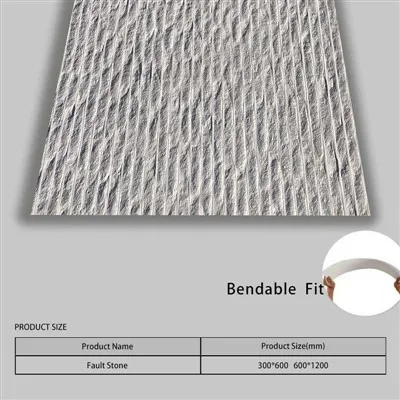
First, let’s get clear on what flexible stone actually is, because the confusion over its identity is at the root of the question. Unlike natural stone tiles cut from solid granite or marble, flexible stone is made from a thin layer of metamorphic stone (most commonly slate, quartzite, or soapstone, ground to a thickness of just 1 to 3 millimeters) bonded to a flexible fiberglass mesh backing. That backing is what gives it its key superpower: bendability. It can curve around arches, columns, and rounded surfaces that rigid stone can’t—without cracking, chipping, or requiring expensive custom cuts. When I first started in the industry, manufacturers mostly marketed it as a replacement for interior tile, highlighting its ease of installation compared to heavy stone. I fell for that narrative hard, because it lined up with the small residential and boutique commercial clients I was working with at the time. I didn’t consider the material’s core properties: its resistance to temperature changes, moisture, and UV light, which made exterior use possible. That’s a gap I’ve spent the last two years filling, both in product testing and in educating my clients.
Let’s talk about why exterior use isn’t just possible—it’s a smart choice for many projects. Last year, I supplied a coastal seafood restaurant in Maine that needed a facade material that could handle salt spray, freezing winters, and intense summer sun. The original bid called for natural stone veneer, but the architect was worried about the weight and long-term maintenance costs. I recommended our 2mm flexible quartzite stone, which had passed 12 months of accelerated weathering tests we ran in our warehouse. Here’s how it performed: flexible stone’s thin profile means it adheres tightly to a stucco or concrete substrate with a thin layer of polymer adhesive, eliminating the risk of water seepage that plagues rigid stone installations. Salt spray doesn’t penetrate the stone layer (its natural composition is non-porous) and the fiberglass backing doesn’t rust or degrade in high humidity. The restaurant’s owners also loved that they didn’t have to replace heavy trim around the entrance—our flexible stone curved around the arched door and window frames, cutting installation time by 30% compared to rigid veneer. I still hear from the general manager that it’s held up better than the cedar siding they used on the rest of the building, which needed staining last spring.
That’s not a one-off success story. Another project I supplied a year later was a university library’s courtyard walkway edging. The campus needed a material that could withstand foot traffic, temperature swings from -10°F in winter to 85°F in summer, and occasional snowplow scrapes. Flexible stone is lightweight, so it didn’t add extra weight to the existing concrete walkway, and its non-slip surface (we offer a matte finish option for high-traffic areas) prevents falls in icy conditions. The university’s facilities team noted that it’s easier to repair than rigid stone, too: if a small section gets chipped, you can cut out just that 1-inch piece of flexible stone and replace it, instead of ripping out an entire tile or veneer panel. That’s a big win for large public spaces where downtime is expensive.
Of course, that doesn’t mean flexible stone works for every exterior application. I’ve learned hard lessons about what to avoid, which I pass on to every client now. For one thing, you can’t use interior-grade flexible stone outdoors. Early in my expansion, I tried testing an interior slate product for a residential homeowner’s outdoor patio, and within six months, the color faded by 20% and the edges started to curl. Why? Interior flexible stone has a protective acrylic topcoat that’s designed for low UV exposure. Exterior flexible stone needs a UV-stabilized topcoat, either a clear acrylic modified for sun resistance or a ceramic coating that blocks fading. That’s a key distinction I highlight in all my product listings now—separating interior and exterior lines clearly, so no one makes the same mistake I did.
Another limitation: it’s not a full substitute for structural stone, nor is it ideal for areas with constant, heavy impact. I’d never recommend flexible stone for a driveway surface, for example, because even reinforced flexible stone can’t stand up to repeated tire pressure and sharp gravel. But for wall cladding, edging, window trim, and decorative features on exteriors, it’s unmatched. I also avoid using it in areas with standing water that pools for days—while it’s moisture-resistant, prolonged immersion can break down the adhesive bond over time, especially in cold climates. That’s why I always advise clients to pair exterior flexible stone with a breathable, flexible adhesive that can expand and contract with temperature changes, rather than a rigid cement-based mortar.
As I’ve expanded into exterior supply, I’ve also discovered unexpected interior uses that I never would have considered when I first limited my business. Wait a second—if exterior works, why not go beyond basic interior walls? For example, I’ve supplied flexible stone for interior feature walls that span two-story vaulted ceilings. Rigid stone can’t handle the curve of a vault without custom cuts, but flexible stone follows the ceiling’s contour seamlessly. I also work with residential clients who use it for fireplace surrounds that curve around a corner—no more bulky, uneven stone cuts that leave gaps between panels. Another popular use: bathroom wall cladding and shower surrounds. Flexible stone’s low porosity means it doesn’t absorb water, so it resists mold and mildew better than some thin ceramic tiles. I recently supplied a custom shower for a high-end home in Scottsdale, where the client wanted a seamless wall that wraps around the shower bench and niche—flexible stone made that possible without grout lines, which are a common spot for mildew growth in bathrooms.
That’s the thing about flexible stone: its versatility comes from its ability to bend, but that same property unlocks design possibilities on both sides of the interior-exterior divide. It’s not just a “lightweight stone”—it’s a material that works for any surface that needs a natural stone look, regardless of location. When I first started, I thought I was serving a niche audience: people who wanted a sleek, modern alternative to heavy marble. Now, I’m supplying everyone from residential homeowners to commercial architects and municipal project managers, all looking for a durable, easy-to-install stone solution.
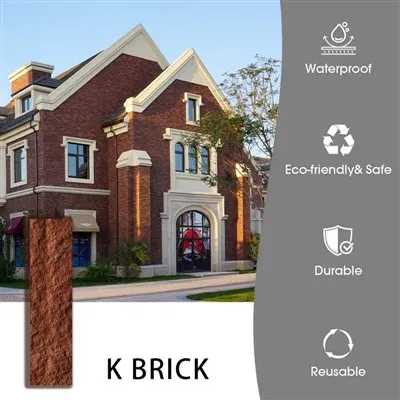
I’ll wrap this up with a few key takeaways that I’ve learned after three years in this business, because I know there are other suppliers (and clients) who still think flexible stone is only for interior walls. First: interior-grade flexible stone is not designed for exterior use, but exterior-grade flexible stone works for nearly all interior applications, including wet areas like bathrooms and kitchens. Second: flexible stone’s biggest advantage—its bendability—means it’s perfect for curved surfaces, both inside and out, that rigid stone can’t handle. Third: it’s not a one-size-fits-all material. Test products for your specific climate (coastal clients need salt-resistant topcoats, northern clients need freeze-thaw rated products) and install with the right adhesive to ensure long-term performance.
OEM/ODM If you’re working on a project, residential or commercial, that involves flexible stone—whether you’re looking to clad a lobby wall, an exterior facade, a shower surround, or a courtyard feature—I’m here to help. I’ve tested products across 10 different climate zones, and I can help you select the right grade, finish, and adhesive for your space. Flexible stone doesn’t have to be limited to interior walls. It’s a material that can elevate any design, inside or out, when chosen and installed correctly. Reach out to discuss your project, and I’ll share the latest test data, installation guidelines, and sample products to help you make the best choice.
References
- ASTM International. Standard Specification for Flexible Ceramic (Polymer-Modified) Wall Tiles, M128-19.
- National Research Council Canada. Durability of Thin Stone Veneer Systems for Exterior Applications, 2021.
- Stone World Magazine. Flexible Stone: Expanding Applications Beyond Interior Walls, July 2022.
- International Code Council. Guide to Adhesive Systems for Thin Stone Cladding, 2023.
Jiangsu Baidai Energy-Saving Building Materials Co., Ltd.
As one of the most professional flexible stone manufacturers and suppliers in China for over 20 years, we also support customized service. Please feel free to buy flexible stone made in China here and get free sample from our factory. For price consultation, contact us.
Address: NO.37 Standard Workshop, Hailing Industrial Park, Taizhou City, Jiangsu Province, P.R.China
E-mail: Andy@baidai.cn
WebSite: https://www.bdflexiblestone.com/
